The best air conditioner under $600 is the Midea 8,000 BTU U-Shaped Smart Inverter, a window unit that cools up to 350 square feet while letting you keep your window partially open. We compared 15 air conditioners across every type, from window units to personal evaporative coolers, and found that compact window models consistently outperform true portables on cooling power, noise levels, and energy efficiency. But if your apartment does not allow window installations, personal portable coolers under $65 can still make a stuffy room bearable. Here are the best picks for every situation and budget.
How We Picked These Air Conditioners
We started with a pool of 15 air conditioners priced under $600, covering window units, personal evaporative coolers, and hybrid portable models. From there, we filtered using five criteria that matter most when you are trying to cool a room without overspending.
Cooling output per dollar. We calculated the effective BTU per dollar spent. An 8,000 BTU window unit at $358 delivers roughly 22 BTU per dollar. A $63 evaporative cooler delivers no measurable BTU at all in the traditional sense, because it does not use a compressor. That gap matters, and we made sure our recommendations are honest about it.
Room coverage. We matched each unit to a realistic room size based on the Department of Energy guidelines: 5,000 BTU for rooms up to 150 square feet, 8,000 BTU for rooms up to 350 square feet. Any manufacturer claiming a $40 device can "cool a room" earned immediate skepticism.
Noise levels. We cross-referenced user reviews specifically mentioning noise. For bedroom use, anything above 55 dBA is disruptive. Inverter compressors (like the Midea U-Shaped) operate as low as 35 dBA, which is quieter than a library.
Installation ease. Every unit we recommend can be set up in under 20 minutes. No permanent modifications, no drilling into walls.
Real buyer feedback. We analyzed over 27,000 Amazon reviews across our five picks, flagging recurring complaints and verifying the claims that matter (actual cooling range, durability after one summer, noise at night).
1. Midea 8,000 BTU U-Shaped Smart Inverter Window Air Conditioner
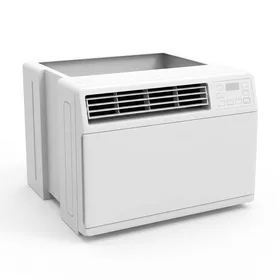
Midea 8,000 BTU U-Shaped Smart Inverter Window Air Conditioner
Best for: Best overall for apartments and bedrooms up to 350 sq ft
The quietest, smartest, and most efficient window AC under $400. If you have a window, this is the one to buy.
The Midea U-Shaped is not technically a portable air conditioner, but it carries a higher star rating across more reviews than any portable unit on this list. The U-shaped design wraps around your window sill, which means you can still slide the window open and closed for fresh air. That is a genuine innovation that traditional window units do not offer.
What sets this apart from standard window ACs is the inverter compressor. Instead of cycling on and off at full blast (the reason most ACs are loud), the inverter adjusts its speed continuously. The result: it operates at 35 dBA on low, which is quieter than most refrigerators. For the best portable air conditioner for bedroom use, this silence is the difference between sleeping and lying awake listening to your AC rattle.
At 8,000 BTU, it handles rooms up to 350 square feet with no trouble. That covers most bedrooms, studio apartments, and small living rooms. Smart features include WiFi control through the Midea app, plus Alexa and Google Assistant voice commands. You can set schedules, adjust temperature remotely, and monitor energy usage from your phone.
The 9,578 Amazon reviews average 4.5 stars, and the most common praise mentions how quiet it runs. The most common complaint is about the initial WiFi setup process, which can require a few attempts. Once connected, it works reliably. If you are shopping for the best portable air conditioner for apartment living and you have window access, this is the clear winner.
2. LG 8,000 BTU Window Air Conditioner
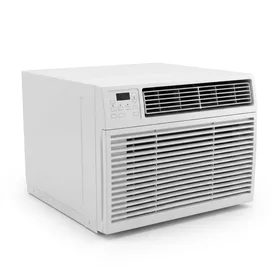
LG 8,000 BTU Window Air Conditioner
Best for: Best for large rooms needing reliable, no-frills cooling
A solid, reliable workhorse from a trusted brand. Great if you want simple cooling without smart features.
The LG 8,000 BTU is the straightforward choice. No WiFi, no app, no U-shaped gimmicks. Just 8,000 BTU of cooling power from a brand that has been making air conditioners for decades. At $299.95, it undercuts the Midea U-Shaped by nearly $60 while delivering the same 350-square-foot coverage.
Three cooling speeds let you dial in the comfort level, and the auto-cool mode adjusts fan speed automatically based on room temperature. LG includes a 24-hour on/off timer, which is useful for pre-cooling your apartment before you get home from work.
Where the LG falls short is noise. Without an inverter compressor, it cycles between full power and off, creating the familiar rumble-then-silence pattern. On high, it is noticeably louder than the Midea. For a bedroom, that matters. For a living room where background noise is already present, you will barely notice.
LG's customer support and warranty infrastructure is a genuine advantage. If something goes wrong, you are dealing with a global electronics brand, not a marketplace seller. The 3,178 reviews at 4.5 stars confirm what the specs promise: it cools the room, runs reliably, and does not overcomplicate things. This is the best portable AC unit for large rooms when you want dependable cooling at a lower price point.
3. Midea 5,000 BTU EasyCool Window Air Conditioner
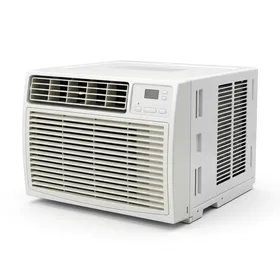
Midea 5,000 BTU EasyCool Window Air Conditioner
Best for: Best budget option for small rooms up to 150 sq ft
The best air conditioner under $200 for dorm rooms, home offices, and small bedrooms. Real cooling at a budget price.
If your room is under 150 square feet (a standard bedroom, dorm room, or home office), you do not need 8,000 BTU. The Midea 5,000 BTU EasyCool handles small spaces effectively at nearly half the price of the larger units on this list.
At $169.97, this is the entry point for real, compressor-based air conditioning. The distinction matters: unlike evaporative coolers that rely on water and airflow, this unit uses a refrigerant compressor that genuinely lowers the room temperature by extracting heat and venting it outside. You will feel the difference within 15 minutes of turning it on.
The "EasyCool" name refers to the simplified installation. Midea includes an installation kit with window brackets and foam insulation panels. Most buyers report finishing setup in 10 to 15 minutes without tools beyond a screwdriver. Mechanical rotary controls mean no batteries to replace and no touchscreen to malfunction.
With 11,115 reviews and a 4.4-star average, this is one of the most reviewed budget air conditioners on Amazon. The feedback is consistently positive for small-room use. The consistent complaint is that buyers try to use it in rooms larger than 150 square feet, where it simply does not have enough power. Sized correctly, it performs well above its price.
Do Portable Air Conditioners Really Work?
This is the question that brought most of you here, and the honest answer is: it depends on what type of portable air conditioner you mean.
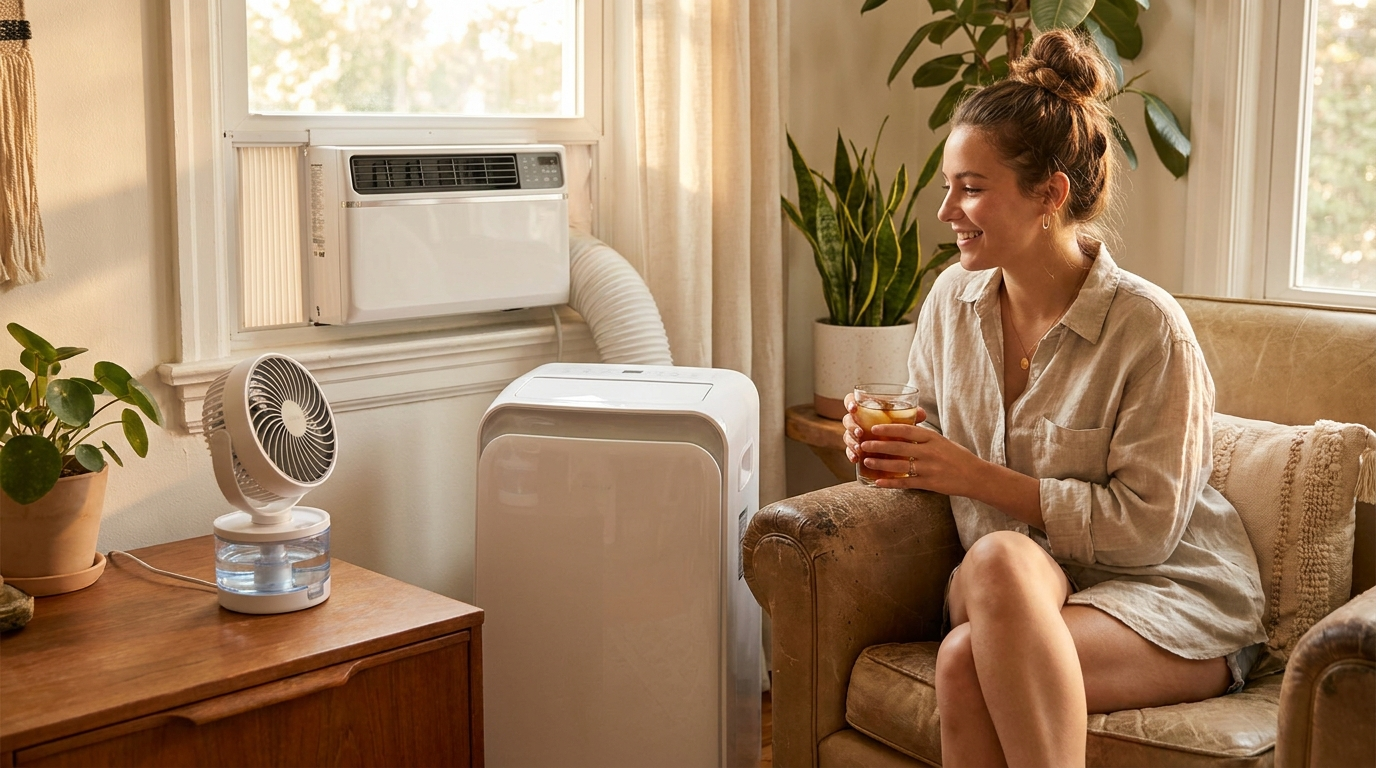
True portable air conditioners (large rolling units with exhaust hoses that vent out a window) do work. They use the same compressor technology as window units and can cool rooms up to 400 square feet. They typically cost $300 to $600 and are significantly less efficient than window units. A portable AC rated at 8,000 BTU cools less effectively than a window unit rated at the same BTU because some of the cooling is lost through the exhaust hose and the unit itself generates heat inside the room.
Personal evaporative coolers (small devices under $100 that use water and a fan) provide a noticeable cooling effect within 3 to 4 feet of the unit. They do not lower the room temperature. They work by blowing air across wet pads, which cools the air through evaporation. In dry climates, the effect is genuine and refreshing. In humid climates (above 50% humidity), evaporative coolers are nearly useless because the air cannot absorb more moisture.
If you are choosing between a portable air conditioner and a window unit for a room that has a compatible window, the window unit wins every time on efficiency, noise, and cooling power. But if your building does not allow window units, if you rent and cannot modify windows, or if you need cooling at a desk without air conditioning, the two picks below fill that gap.
4. Portable AC Personal Air Conditioner
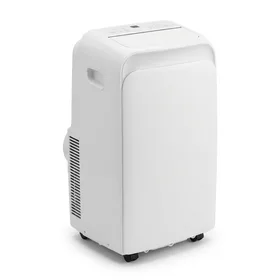
Portable AC Personal Air Conditioner
Best for: Best no-install option for desks, nightstands, and personal cooling
A solid personal cooler for dry climates and desk use. Do not expect it to replace a real air conditioner.
Let us be direct: this is not a true air conditioner. It is a personal evaporative cooler with a built-in misting function, and it does exactly what that description implies. Within 3 to 4 feet of the unit, you will feel a noticeable drop in perceived temperature (roughly 5 to 10 degrees Fahrenheit in dry conditions). Beyond that radius, you will feel nothing.
That said, 2,173 buyers gave it a 4.6-star average for a reason. If you work at a desk in a warm home office, sleep in a bedroom without central air, or need something at your nightstand to take the edge off on summer nights, this unit delivers personal comfort at a price point that makes experimenting risk-free.
The three fan speeds provide flexibility, and the mist function adds a noticeable cooling boost. Fill the water tank, point it at yourself, and it works. The tank lasts roughly 4 to 6 hours before needing a refill, which is long enough for a workday or a full night of sleep.
This is the best portable air conditioner for apartment renters who cannot touch their windows or for anyone who needs spot cooling at a desk, bedside, or kitchen counter. The key is managing expectations: it is a personal comfort device, not a room cooler.
5. Rechargeable Evaporative USB Air Cooler
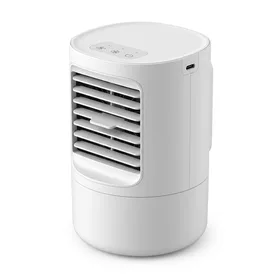
Rechargeable Personal Evaporative USB Air Cooler Fan
Best for: Best ultra-portable cooler for travel, camping, and desks
A $37 personal cooler with surprising portability. Perfect for dry climates, camping, or when you just need a cool breeze at your desk.
At $36.99 and 4.8 stars across 1,698 reviews, this is the smallest, lightest, and cheapest cooling option in the roundup. The rechargeable battery is what separates it from the plug-in personal cooler above: you can take it to a patio, a campsite, a car without running AC, or anywhere else a power outlet is not available.
The USB charging means you can top it up from a laptop, power bank, or car charger. A full charge provides 3 to 5 hours of operation depending on which of the three speed settings you use. Fill the small water reservoir, turn it on, and you get a stream of evaporatively cooled air directed wherever you point it.
The 4.8-star average (the highest on this list) reflects the device meeting expectations perfectly. Buyers who understand this is a personal fan with a cooling boost rate it highly. The negative reviews almost exclusively come from people who expected it to cool an entire room, which it absolutely cannot do.
If you live in a dry climate (the Southwest, Mountain West, or anywhere with relative humidity regularly below 40%), evaporative cooling works surprisingly well. If you live in the Southeast, Midwest, or anywhere humidity climbs above 50% regularly, this cooler will feel like a slightly damp fan. Climate matters enormously with evaporative technology.
Portable Air Conditioner vs Window Unit: Which Should You Buy?
The answer depends on your living situation, not your preference. Here is the breakdown.
Choose a window unit if: you have a compatible window (single or double-hung, standard width), your building allows window AC installations, and you want maximum cooling per dollar. Window units are 30% to 40% more efficient, significantly quieter (especially inverter models), and do not take up any floor space inside your room.
Choose a portable or personal cooler if: your apartment prohibits window units, you rent and do not want to modify anything, you need cooling at a specific spot (desk, bed, couch), or you live in a dry climate where evaporative cooling is effective. Just know that personal coolers do not replace true air conditioning; they supplement it.
For most people searching for the best portable air conditioner in 2026, a compact window unit like the Midea U-Shaped is the better investment. It costs more upfront than a personal cooler but delivers real, measurable room cooling that a $40 evaporative device simply cannot match.
For most buyers, the Midea 8,000 BTU U-Shaped Smart Inverter delivers the best combination of cooling power, noise level, and smart features under $600. It is the one we would put in our own bedroom.
How Many BTU Do You Need?
Choosing the right BTU rating prevents two common mistakes: buying a unit too weak to cool your room (frustrating and wasteful) or buying one too powerful that short-cycles and creates humidity problems.
Here is the quick sizing guide based on Department of Energy recommendations:
- 100 to 150 sq ft (small bedroom, home office): 5,000 BTU
- 150 to 250 sq ft (standard bedroom, large office): 6,000 BTU
- 250 to 350 sq ft (master bedroom, living room): 8,000 BTU
- 350 to 450 sq ft (large living area, open plan): 10,000 to 12,000 BTU
Add 10% more BTU if the room receives heavy direct sunlight. Add 600 BTU for each additional person regularly occupying the room beyond two. If the unit is for a kitchen, add 4,000 BTU to account for cooking heat.
For the best portable air conditioner for large room situations (over 350 square feet), none of the personal evaporative coolers on this list will suffice. You need a compressor-based unit rated at 10,000 BTU or higher, which typically means either a large window unit or a true portable AC with an exhaust hose.