Choosing a baby carrier is one of those decisions that affects every single day of early parenthood. The right one keeps your hands free, your baby calm, and your back intact. The wrong one collects dust in a closet after two uses. We compared 27 popular carriers and wraps across comfort, ergonomic support, ease of use, and value, then narrowed the field to the standouts that cover every need and budget, from stretchy wraps for newborns to structured carriers that last through toddlerhood.
How We Picked These Carriers
The best baby carriers in 2026 need to nail three things: ergonomic positioning for the baby (the "M" hip position pediatricians recommend), comfortable weight distribution for the parent, and a learning curve that does not require a PhD in origami.
We started with every carrier and wrap that had at least 4,000 Amazon reviews, then filtered for models that support the International Hip Dysplasia Institute's recommended positioning. From there, we evaluated each one across five criteria:
- Ergonomic design. Does the carrier support the baby's natural hip-spread position with knees higher than the bottom? Narrow-based carriers that let legs dangle were eliminated immediately.
- Weight distribution. We looked for padded shoulder straps, lumbar support, and wide waistbands that prevent the "all weight on shoulders" problem that makes cheaper carriers painful after 20 minutes.
- Ease of use. How many attempts does it take to get the baby in and out? Can you do it solo? Wraps were evaluated on how quickly a new parent could learn the technique.
- Age and weight range. The best carriers grow with your baby. We prioritized models that work from the newborn stage (7 pounds) through at least 35 pounds.
- Breathability and fabric quality. Babies run warm. Carriers need airflow, especially for summer use or indoor babywearing.
One important distinction before we get into the picks: baby wraps and structured carriers serve different purposes. A baby wrap is a long piece of stretchy or woven fabric you tie around your body, ideal for newborns and the first several months. A structured carrier has buckles, a waist belt, and a formed seat panel, better for older babies and longer carry sessions. Many parents end up owning one of each: a wrap for the early weeks, then a structured carrier from about 4 months onward.
1. Ergobaby 360 All-Position Baby Carrier: Best Overall
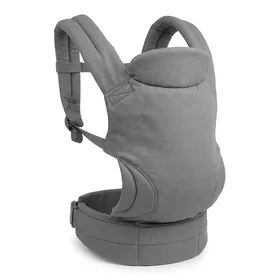
Ergobaby 360 All-Position Baby Carrier with Lumbar Support
Best for: Best overall structured carrier for newborns through toddlers
The carrier most parents wish they had bought first. Worth the investment if you plan to babywear regularly through toddlerhood.
The Ergobaby 360 is the carrier that keeps showing up in "what do you actually use every day" parent threads, and the data backs up the reputation. With a 4.7 star average across 4,260 reviews, it is one of the highest rated structured carriers in its price range.
What sets the Ergobaby 360 apart from competitors like the BabyBjorn is the combination of four carry positions (front inward, front outward, hip, and back) with genuinely effective lumbar support. The padded waistband distributes weight to your hips rather than your shoulders, which makes a meaningful difference on longer outings. Multiple reviewers specifically mention being able to carry a 25 pound toddler for over an hour without back pain.
The 12 to 45 pound weight range is generous. You will not need a separate infant insert for most full-term newborns, and the carrier remains comfortable well into the toddler years. The crossable shoulder straps accommodate a wide range of parent body types, from petite to plus-size.
The Ergobaby vs BabyBjorn debate comes up constantly in parenting forums. The key difference: the Ergobaby 360 offers superior lumbar support and a wider seat that keeps the baby in the recommended "M" position at every stage. BabyBjorn carriers tend to be easier to put on but place more strain on the parent's shoulders during extended wear. If you plan to carry your baby for more than 30 minutes at a stretch (walks, grocery runs, hikes), the Ergobaby wins.
The Ergobaby 360 is the best baby carrier for parents who want one carrier that handles everything from newborn snuggles to toddler hikes. At $135, it costs more upfront but replaces the need for multiple carriers.
2. Boba Wrap Baby Carrier: Best Wrap for Newborns
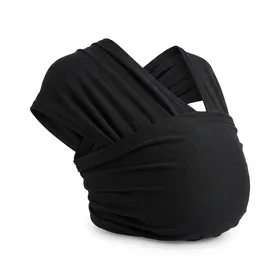
Boba Wrap Baby Carrier, Black
Best for: Best baby wrap for newborns and the first 6 months
The gold standard newborn wrap. Nothing replicates the closeness and calm of a well-tied Boba in those first weeks.
The Boba Wrap is the best baby wrap for newborn use, and the review numbers tell the story: nearly 20,000 ratings with a 4.5 star average make it one of the most purchased and reviewed baby wraps on Amazon. That volume of feedback is rare for a single baby product.
The fabric is a stretchy French terry cotton blend that feels soft against both your skin and your baby's. When tied correctly, it creates a snug, womb-like hold that keeps newborns in the natural fetal tuck position: legs curled, spine rounded, head supported at kissing height. This is the position that pediatricians and babywearing educators recommend for the first several months.
The Boba Wrap works from 7 pounds (most newborns) up to about 35 pounds, though it is most practical in the 7 to 25 pound range. Once babies start getting heavier and more wiggly, the stretchy fabric can feel less secure, and most parents transition to a structured carrier like the Ergobaby around the 5 to 6 month mark.
The honest downside: there is a learning curve. If you have never used a baby wrap before, expect to practice the basic front wrap cross carry 3 to 5 times before it feels intuitive. YouTube tutorials from Boba and babywearing educators are excellent, and most parents report feeling confident within a week. The payoff is worth the practice. A well-tied wrap distributes weight so evenly that many parents describe it as "barely feeling" a 12 pound newborn.
For breastfeeding parents, the Boba Wrap is also one of the best baby carriers for breastfeeding. The stretchy fabric allows you to adjust the baby's position for nursing while keeping both hands relatively free. It is not as effortless as some marketing suggests (you will still need one hand for support), but it is far easier than nursing in a structured carrier.
The Boba Wrap accounts for 19,887 of the 48,526 ratings behind the four carriers on this list, so roughly two of every five ratings here sit with a single wrap. Every pick clears 4.4 stars, with a 4.5 star average across the four, which means the Boba holds that average while carrying far more feedback than anything else here. Rating volume cannot tell you whether a wrap suits your body or your baby; it does tell you this one has been bought at a scale few baby products reach.
3. CuddleBug Baby Wrap Sling + Carrier: Best Value
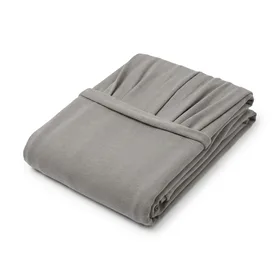
CuddleBug Baby Wrap Sling + Carrier
Best for: Best value baby wrap for budget-conscious parents
Delivers most of the Boba Wrap experience for $5 less, with better breathability. A smart pick for parents who want to try babywearing without a big investment.
At $29.99, the CuddleBug is the cheapest way into a full-size stretchy wrap short of the Acrabros. The gap to the Boba Wrap has narrowed to $5 now that Boba sits at $34.99, so the CuddleBug earns its place on breathability and packability as much as on price. It is still the wrap we point new parents to when they want to try babywearing before committing to a premium option.
The fabric is a lightweight cotton spandex blend that is thinner than the Boba Wrap. This is both a pro and a con: the CuddleBug is noticeably more breathable (a real advantage in warmer months or for parents who run hot), but the thinner material provides slightly less support as your baby gets heavier. For the newborn through 20 pound range, most parents report no difference in comfort or security compared to premium wraps.
With 10,481 reviews and a 4.4 star average, the CuddleBug has a strong track record. The most common praise centers on the value proposition: parents who bought it as a "test" wrap ended up using it daily through the entire newborn period. The included storage pouch is a thoughtful touch that makes it easy to toss in a diaper bag.
The 36 pound weight limit is technically higher than the Boba Wrap, but in practice, the thinner fabric means most parents switch to a structured carrier around the same 20 to 25 pound threshold. The CuddleBug shines brightest as a dedicated newborn wrap for the first 4 to 6 months.
Where the CuddleBug falls short is in the included instructions. Several reviewers note that the printed guide is not as clear as it could be, and recommend watching YouTube tutorials instead. This is not unique to CuddleBug (wrap instructions are notoriously confusing across brands), but the Boba Wrap does a better job with its printed materials and QR code video links.
At $29.99, the CuddleBug removes the financial barrier to babywearing. If you are not sure whether wrapping is for you, start here.
4. Acrabros Baby Wrap Carrier: Best Budget Pick
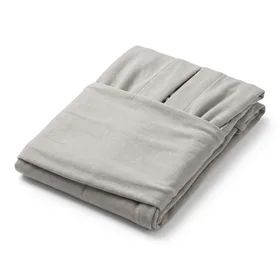
Acrabros Baby Wrap Carrier, Hands Free
Best for: Best budget baby wrap under $25
The entry point for babywearing on a tight budget. Works well for the newborn months and costs less than a pack of diapers.
The Acrabros pushes the price floor even lower at $23.99, making it the least expensive baby wrap on our list. What is surprising is how well it performs at that price point: 13,898 reviews with a 4.4 star average suggest that most parents are satisfied.
The fabric is a lightweight cotton blend designed for breathability. It is the thinnest wrap on our list, which makes it the best choice for summer babywearing or for parents in warmer climates who worry about overheating. The trade-off is durability: after several months of daily use and machine washing, the stretch recovery is not as resilient as the Boba or CuddleBug.
The Acrabros is best suited for the newborn through 15 to 20 pound range. It works within that window, but parents carrying heavier babies consistently report that the fabric starts to sag and feel less secure. Think of it as a dedicated newborn wrap rather than an all-stages solution.
For parents who want to test whether babywearing works for their family before investing in a premium carrier, the Acrabros is hard to beat on price. It costs less than most baby blankets, and if you end up loving babywearing, you can upgrade to a Boba Wrap or Ergobaby later with confidence.
A perfectly functional newborn wrap at a price that makes it essentially risk-free to try. Upgrade to a structured carrier or premium wrap once your baby outgrows it.
Baby Wrap vs Structured Carrier: Which Do You Need?
This is the first question most parents face, and the answer depends on your baby's age and how long you plan to carry.
Baby wraps (like the Boba, CuddleBug, and Acrabros) excel in the newborn period. They create a close, skin-to-skin hold that calms fussy babies and supports the natural curled position of infants. Wraps distribute weight evenly and feel like a gentle hug for both parent and baby. The downsides: there is a learning curve, the fabric can be warm, and they become less practical as babies grow heavier and more active.
Structured carriers (like the Ergobaby 360) are better for older babies, longer carry sessions, and active use like hiking. They are faster to put on, offer more carrying positions (including forward-facing and back carry), and handle heavier weights more comfortably. The downsides: they cost more, feel bulkier, and are not as cozy for tiny newborns.
The ideal setup for most families: A stretchy wrap ($24 to $35) for the first 4 to 6 months, then a structured carrier ($100 to $180) from 4 months through toddlerhood. This two-carrier approach gives you the best tool for each stage without forcing either type to do something it is not designed for.
How All 4 Carriers Compare
When to Start Using a Baby Carrier
Most baby carriers and wraps are safe to use from birth, provided your baby was born full-term and weighs at least 7 pounds. Stretchy wraps like the Boba are particularly well suited for newborns because the fabric naturally supports the baby's curved spine and tucked legs.
For structured carriers, check the minimum weight requirement. The Ergobaby 360 starts at 12 pounds, which means most babies fit at around 1 to 2 months of age (some larger newborns may fit from birth). If you want to babywear from day one, a stretchy wrap is the safer and more comfortable choice.
A few safety guidelines for new babywearers:
- The T.I.C.K.S. rule. Tight, In view at all times, Close enough to kiss, Keep chin off chest, Supported back. This acronym covers the essential safety checks every time you use a carrier.
- Start with short sessions. Begin with 15 to 20 minutes and build up as both you and your baby get comfortable.
- Skip the carrier during cooking. Never wear your baby near hot surfaces, boiling water, or open flames.
- Check the fit regularly. Babies shift position, especially in wraps. Do a quick safety check every 10 to 15 minutes.
Who Should Buy What
New parents expecting a newborn: Start with the Boba Wrap ($34.99). It is the best baby wrap for newborns, and the closeness it provides during those early weeks is something many parents describe as irreplaceable.
Parents on a tight budget: The Acrabros ($23.99) or CuddleBug ($29.99) get you into babywearing for under $30. Both work well for the newborn period, and you can always upgrade later.
Parents who want one carrier for everything: The Ergobaby 360 ($135) is the best baby carrier from a versatility standpoint. Four carry positions, a wide weight range, and excellent back support make it the only carrier many families ever need.
Parents who plan to hike with their baby: The Ergobaby 360 is also the best baby carrier for hiking among our picks. The structured support and lumbar padding handle the extra demands of uneven terrain and longer carry times far better than any wrap.
Parents of toddlers who still want to be carried: The Ergobaby 360 supports up to 45 pounds, making it the best baby carrier for toddler use. The wide base and padded straps distribute weight effectively even with a 30 pound two-year-old.
The Bottom Line
The best baby carriers solve a simple problem: you need your hands free, and your baby needs to be close. A $24 wrap can do that beautifully for the first several months. A $135 structured carrier can do it for three years. And the best approach for most families is to own one of each, using the wrap for the tender newborn weeks and the structured carrier for everything that comes after.
Every carrier on this list has thousands of reviews from real parents, supports healthy hip positioning, and is machine washable (because everything baby-related needs to be machine washable). The differences come down to budget, your baby's age, and how long you want the carrier to last.