Finding a cheap espresso machine that actually produces good shots is harder than it should be. Most budget options either choke on pressure, leak after three months, or brew something closer to burnt water than real espresso. We compared 15 machines under $200 across brew quality, milk frothing capability, ease of use plus long-term durability. These picks deliver the closest thing to cafe espresso without draining your bank account.
How We Picked These Machines
We started with espresso and espresso-style machines priced under $200 on Amazon, leaning on models carrying thousands of verified reviews. That screen alone eliminated dozens of no-name imports with inflated ratings plus suspiciously few buyers. One exception is flagged in the list below: our pump espresso pick is a newer listing, so we publish its verified price without attaching a review count we cannot stand behind.
Across all espresso machines under $200 on Amazon, only 11 models have both a 4.4+ star rating and more than 5,000 verified reviews. The average budget espresso machine carries a 3.9 rating, meaning most cheap options disappoint.
From there, we evaluated each machine on five criteria:
- Brew quality: Does it produce espresso with actual crema, or just strong coffee?
- Milk frothing: Can it steam or froth milk for lattes and cappuccinos, either built-in or with a bundled accessory?
- Ease of use: How quickly can a beginner go from unboxing to first shot?
- Durability: What do 6-month and 12-month reviews say about long-term reliability?
- Value per dollar: Does the price reflect what you actually get?
One honest note: at this price range, you are choosing between pod-based systems (Nespresso, Keurig) plus entry-level pump machines with a portafilter. True semi-automatic espresso machines with PID temperature control and proper pre-infusion start around $300 with the Breville Bambino. If you are willing to stretch your budget, our best espresso machines under $300 guide covers that tier. Everything below sits under the $200 line as of our August 2026 price check, so the ceiling in the headline is a real ceiling rather than a rounding exercise.
1. Nespresso Vertuo Coffee and Espresso Maker by De'Longhi: Best Overall
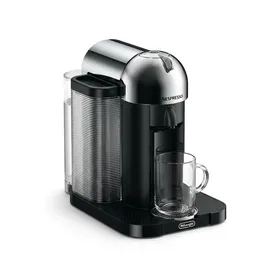
Nespresso Vertuo Coffee and Espresso Maker by De'Longhi
Best for: Best overall for beginners and daily espresso drinkers
The best cheap espresso machine for anyone who values convenience and consistency over manual control.
The Nespresso Vertuo is the best budget espresso machine for one simple reason: it removes every variable that makes espresso hard. Drop in a capsule, press the button, then the machine reads a barcode on the pod to automatically set water volume, temperature plus spin speed. You get identical results every single time.
What sets this bundle apart from the base Vertuo is the included Aeroccino milk frother. Without it, you are limited to straight espresso and americanos. With it, you can make lattes, cappuccinos plus flat whites that genuinely rival a mid-tier coffee shop. The frother heats and froths milk in about 60 seconds, producing dense microfoam that holds its shape.
The trade-off is capsule lock-in. Nespresso Vertuo pods use a proprietary design, so you cannot use third-party alternatives the way you can with Original Line capsules. At roughly $1.10 per espresso capsule, a daily habit runs about $33 per month. That is still less than half the cost of a daily Starbucks run, but it is worth factoring into your budget. If you drink one espresso per day, this machine pays for itself versus cafe prices in under three weeks.
The Vertuo also brews regular coffee in 8-ounce and 14-ounce sizes, which makes it genuinely versatile. If your household has one espresso drinker and one drip coffee drinker, this single machine covers both.
At $117.99 with the Aeroccino frother included, the Nespresso Vertuo offers the best combination of espresso quality, ease of use plus value under $200.
2. Nespresso Essenza Mini: Best Compact Espresso Machine
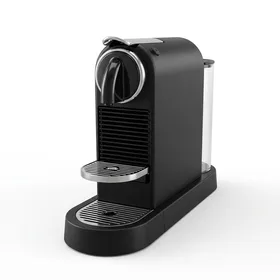
Nespresso Essenza Mini Espresso Machine
Best for: Best compact option for small kitchens and single-serve espresso
The best affordable espresso machine if you drink straight espresso and want a tiny footprint.
The Essenza Mini is Nespresso stripped down to its essentials. It brews espresso and lungo, heats up in 25 seconds; it takes up less counter space than a toaster. For studio apartments, dorm rooms, or office desks, the compact form factor is a genuine advantage.
Unlike the Vertuo, the Essenza Mini uses Nespresso Original Line capsules. This is a significant benefit because dozens of third-party brands (Peet's, Starbucks, Lavazza plus many others) make compatible pods at lower prices. You can find multi-packs for as little as $0.50 per capsule, cutting your per-shot cost nearly in half compared to Vertuo pods.
The 19 bars of pump pressure also produce better crema than the Vertuo's centrifugal system, which matters if you are particular about espresso texture. Several Reddit threads in the "espresso machine under 200 reddit" discussions specifically praise the Essenza Mini's shot quality relative to its price.
The downside is clear: no milk frother. If you want lattes, you need to buy a frother separately (we recommend a solid option below). Adding a handheld frother brings your total to around $187, which is still within the $200 budget. But if you primarily drink straight espresso or americanos, this omission will not bother you at all.
At $179.95, the Essenza Mini is the best compact espresso machine under $200 for purists who want great shots in a tiny package.
3. Keurig K-Cafe Special Edition: Most Versatile Under $200
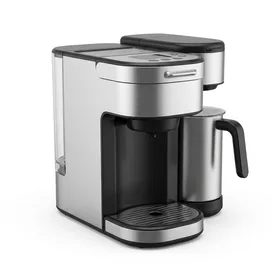
Keurig K-Cafe Special Edition Single Serve Coffee, Latte and Cappuccino Maker
Best for: Most versatile option for households that want coffee, lattes plus cappuccinos
The best pick for families who want latte-style drinks without learning espresso technique, as long as you accept it is concentrated coffee rather than true espresso.
The Keurig K-Cafe deserves an honest disclaimer: it does not make real espresso. The "Shot" button brews a concentrated 2-ounce serving of strong coffee using a K-Cup pod, but there is no 15-bar pressure system extracting oils and producing authentic crema. What you get is closer to a moka pot concentrate than a pulled shot.
That said, for many people, this distinction does not matter. If your goal is a milky latte or a foamy cappuccino that tastes good and takes 90 seconds to make, the K-Cafe delivers. The built-in frother sits on the right side of the machine and handles both hot and cold frothing. It produces solid foam for cappuccinos and heated milk for lattes. The foam is not as silky as a steam wand's microfoam, but it is noticeably better than most handheld frothers.
The real strength here is the K-Cup ecosystem. You have access to hundreds of pod varieties from every major coffee brand. Prefer a dark roast latte on Monday and a vanilla cappuccino on Wednesday? Just swap the pod. No grinding, no tamping, no cleanup beyond tossing the used capsule.
The 60-ounce reservoir is the largest in this roundup, meaning fewer refills during a busy morning. And every removable component is dishwasher safe, which cuts maintenance time to nearly zero.
If you want the simplest path to latte-style drinks and do not mind that it is technically strong coffee rather than espresso, the K-Cafe is excellent value at $140.99.
4. CASABREWS CM5418 Compact Espresso Machine: Best True Espresso Under $200
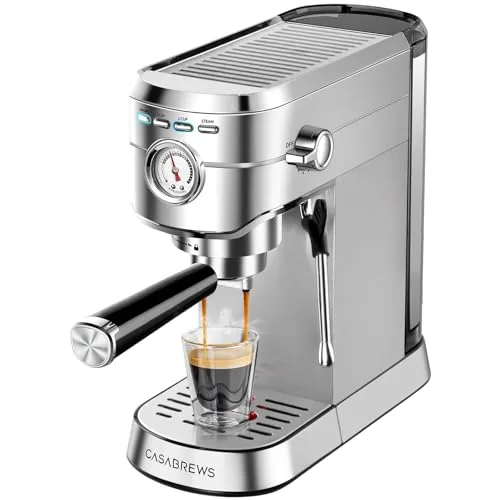
CASABREWS CM5418 Compact Espresso Machine with Milk Frothing Steam Wand
Best for: Best true pump espresso for people who want to steam their own milk
The pick for anyone who wants genuine pump espresso without crossing $200, as long as you are willing to learn to steam milk.
The CASABREWS CM5418 is the only machine in this roundup that brews pressure-extracted espresso. You grind coffee, dose it into a portafilter, tamp it, then lock it into the group head, which is the same sequence you would follow on a machine costing three times as much. That matters because pods cannot be adjusted. Here you control the dose plus the grind, which is the difference between a shot you tolerate and a shot you tune.
Milk is where this machine asks something of you. It has a steam wand rather than an automatic frother, so nothing happens on its own. You purge the wand, submerge the tip, stretch the milk for a few seconds, then drop the pitcher to spin it into a whirlpool. Done well, that produces microfoam better than any push-button frother in this guide. Done badly, it produces bubbly hot milk. Expect a week or two of mediocre lattes while your hands figure it out. If that sounds like a chore rather than a hobby, the Keurig K-Cafe above does the frothing for you.
The reward for the extra effort is running cost. Ground coffee runs roughly $0.30 per shot against about $1.10 for a Vertuo capsule. Over a year of one espresso a day, that gap is larger than the price of the machine itself. You also skip the capsule lock-in entirely: any bag of beans on any shelf works.
One point of transparency. We hold a verified price of $139.99 for this model, but we are not quoting a star rating or a review count for it the way we do for the pod machines above, because we do not have figures we can stand behind. Treat the rating column for this pick as unknown rather than as a silent endorsement.
Every pick in this guide now sits under the $200 headline, across a $6.79 to $179.95 spread. The CASABREWS lands at $139.99, third-highest on the list and exactly one dollar below the Keurig K-Cafe. That makes pressure-extracted espresso the cheaper of the two routes to a milk drink here, which is not how this category usually prices out.
The cheapest route to real pump espresso on this list at $139.99, with room to spare under the $200 ceiling. Buy it if you want to learn espresso; skip it if you want a button.
Essential Accessories for Your Budget Espresso Setup
No matter which machine you choose, two accessories can significantly improve your daily espresso experience. If you picked a machine without a built-in frother (like the Essenza Mini), the milk frother below is practically required for milk drinks. And fresh-ground coffee makes a noticeable difference in any portafilter machine like the CASABREWS.
Best Handheld Milk Frother
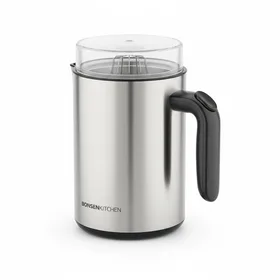
Bonsenkitchen Electric Milk Frother
Best for: Best budget milk frother for espresso drinks
At $6.79 with nearly 70,000 positive reviews, this is the most reliable cheap frother you can buy.
If you buy the Nespresso Essenza Mini and want lattes, pair it with the Bonsenkitchen frother. Heat your milk in the microwave for 45 seconds, then froth for 15 to 20 seconds. The total cost for an Essenza Mini plus this frother is about $187, which is more than the Nespresso Vertuo bundle but gives you 19-bar pressure and access to cheaper third-party pods.
Best Manual Coffee Grinder
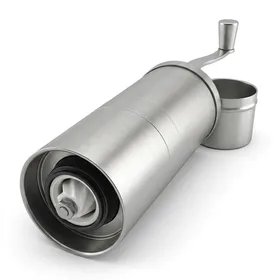
JavaPresse Manual Coffee Grinder with Conical Burr
Best for: Best grinder to pair with the CASABREWS CM5418
Worth the $39.98 if you buy the CASABREWS, which needs ground coffee to work at all. Fresh-ground beans make a noticeable difference in shot quality.
Pre-ground espresso works fine, but freshly ground beans produce noticeably better flavor and crema. If you bought the CASABREWS CM5418 (the only machine here that uses ground coffee in a portafilter), the JavaPresse grinder is a smart $40 upgrade. Set it to the finest grind setting for espresso. Yes, hand grinding takes 2 to 3 minutes, but the flavor improvement is worth the effort for anyone serious about their morning shot. It also brings the machine plus grinder total to about $180, which still clears the $200 ceiling.
How to Choose the Right Cheap Espresso Machine
Picking between these four machines comes down to three questions:
Do you want real espresso or espresso-style drinks? If authentic crema and full-bodied extraction matter to you, the CASABREWS CM5418 at $139.99 is your only option here with a portafilter plus genuine pump pressure. The Nespresso machines produce excellent espresso-style shots, but they use capsule-based extraction. The Keurig makes concentrated coffee, not espresso.
How much cleanup are you willing to do? The Nespresso machines require almost zero daily maintenance: eject the capsule, wipe the drip tray, done. The Keurig K-Cafe falls in the middle with its dishwasher-safe frother. The CASABREWS demands the most attention, since the portafilter basket needs knocking out after every shot plus the steam wand needs purging and wiping after every milk drink.
Do you drink milk-based drinks or straight shots? For black espresso and americanos, the Essenza Mini at $179.95 is a strong choice for its 19-bar pressure plus third-party pod compatibility. For lattes and cappuccinos, you need a way to handle milk: the Vertuo bundle and the K-Cafe do it for you, while the CASABREWS hands you a steam wand and expects you to learn.
Pod Machines vs. Traditional Espresso: What You Should Know
The "espresso machine under 200 reddit" crowd debates this endlessly, so here is the straight answer: true semi-automatic espresso machines with PID temperature control, proper pre-infusion plus commercial-grade portafilters start at around $300 (the Breville Bambino being the usual entry point). Under $200 the field splits in two: pod convenience on one side, entry-level pump machines like the CASABREWS on the other.
Pod machines (Nespresso, Keurig) trade control for consistency. You cannot adjust grind size, tamp pressure or extraction time. But you also cannot ruin a shot. For beginners, that reliability matters more than fine-tuning.
The CASABREWS sits on the other side of that trade. It gives you real pressure extraction plus every variable a $300 machine would give you, minus the temperature stability and the build quality. You can absolutely ruin a shot on it. That is the point: it is the cheapest way to find out whether you actually enjoy making espresso before spending $300 or more on a setup that assumes you do.
If you are comparing a Nespresso to a full espresso setup, consider total cost. A Nespresso machine at $118 to $180 plus $1.10 per pod adds up faster than a $300 machine with $0.30 worth of fresh beans per shot. Over 12 months of daily use, the Nespresso costs about $520 total (machine plus pods), while a Breville Bambino with beans costs about $410. The upfront savings on a cheap espresso machine can be offset by ongoing capsule costs.
At one espresso per day, the annual cost of ownership breaks down to: Nespresso Essenza Mini ($588), Nespresso Vertuo ($520), Keurig K-Cafe ($470 with K-Cups) plus CASABREWS CM5418 ($249 with ground coffee). The cheapest machine to buy is not always the cheapest machine to own; the gap here is almost entirely the price of capsules.
Keeping Your Machine Running: Quick Maintenance Tips
Budget espresso machines last significantly longer with basic upkeep. Three habits will extend the life of any machine in this roundup:
-
Descale every 2 to 3 months. Mineral buildup from tap water is the number one killer of cheap espresso machines. Use a descaling solution or a 50/50 mix of white vinegar and water. Run the solution through a brew cycle, then run two cycles of plain water to flush.
-
Clean milk components after every use. This applies to the Vertuo's Aeroccino, the K-Cafe's frother plus the CASABREWS steam wand. Purge the wand for a second, then wipe it with a damp cloth while it is still hot. Dried milk residue breeds bacteria and blocks the steam holes.
-
Use filtered water. A simple Brita pitcher reduces mineral content, which means less descaling and better-tasting espresso. This single change can double the time between descaling cycles.