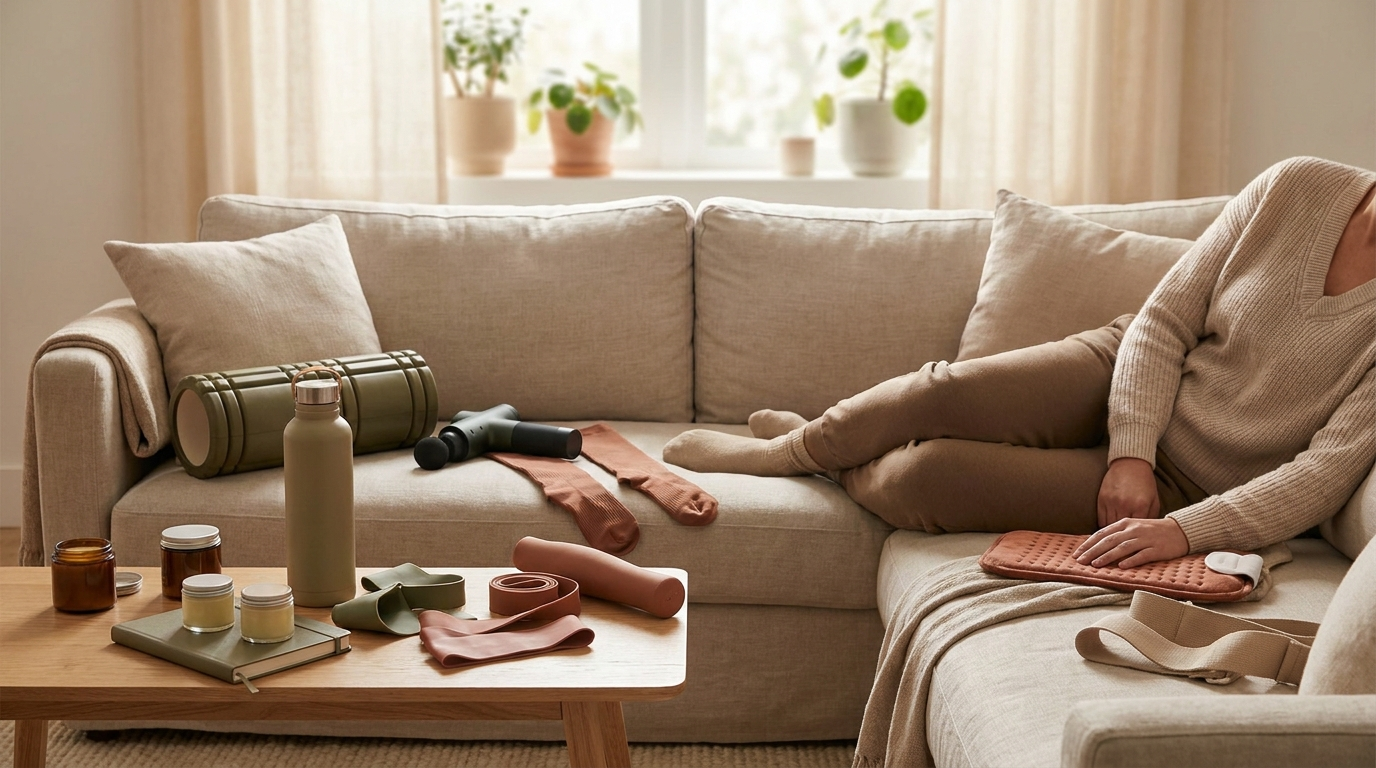
We compared 12 foam rollers across density, surface texture, durability, and over 90,000 user reviews to find the best foam rollers for recovery in 2026. Whether you are dealing with post-run soreness, chronic back pain, or general muscle tightness, one of these seven picks will get the job done without breaking the bank. Prices range from $9.49 to $34.99, and every roller on this list holds a 4.5-star rating or higher.
How We Picked These Foam Rollers
Foam rollers look simple, but the wrong density or texture can mean the difference between genuine recovery and wasted effort (or worse, bruised muscles). Here is how we narrowed the field.
Density matters most. Soft foam rollers suit beginners and people recovering from injury. Medium-density rollers work for general recovery and most body types. Firm, high-density rollers deliver deeper tissue work for athletes and experienced users. We categorized every roller by density so you can match the right firmness to your needs.
Surface texture changes everything. Smooth rollers offer even, predictable pressure. Textured and ridged surfaces mimic the knead of a massage therapist, targeting trigger points more precisely. Both types earn strong ratings across recovery-focused categories, with review counts high enough to show what buyers reach for when back pain, IT band soreness, or calf tightness is the problem.
User review analysis. We filtered for rollers with at least 3,000 verified reviews and a minimum 4.3-star average. Then you look at what the ratings and review counts show: which rollers hold four stars or better across thousands of buyers, which ones have enough volume behind that average to mean something and which sit high on a category rank. Those signals do not tell you everything, but they are honest.
Price versus lifespan. A $14 foam roller that flattens in two months is not cheaper than a $28 roller that lasts three years. We factored in long term durability based on review feedback at the six month and one year marks.
We also considered portability, weight, and whether each roller works well for foam roller exercises for recovery like IT band rolls, thoracic spine extensions, and quad releases.
1. TriggerPoint GRID Foam Roller: Best Overall
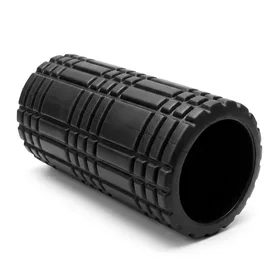
TriggerPoint GRID Foam Roller for Exercise, Deep Tissue Massage and Muscle Recovery
Best for: Best overall foam roller for most people
The TriggerPoint GRID is the foam roller physical therapists recommend most. It is the best foam roller for runners, lifters, and anyone who wants one roller that does it all.
The TriggerPoint GRID has earned its reputation over 20,000 reviews for a reason. The patented surface features three distinct zones: a flat panel for broader strokes, tubular ridges for medium pressure, and finger-like nodes for targeted trigger point work. This variety means you do not need multiple tools.
The rigid, hollow EVA core is the key differentiator. Unlike solid foam rollers that compress and lose shape, the GRID maintains its density month after month. Reviewers consistently report the roller performing identically after 12 or even 24 months of daily use. At 500 pounds of weight capacity, it works for virtually any body type.
The tradeoff is length. At 13 inches, you cannot roll your entire back in one pass. For thoracic spine work, you will need to reposition. If full back coverage is a priority, the 26 inch version exists but costs roughly $10 more.
For the best foam roller for sore muscles across your whole body, the GRID earns the top spot.
2. 321 STRONG Foam Roller: Best Value
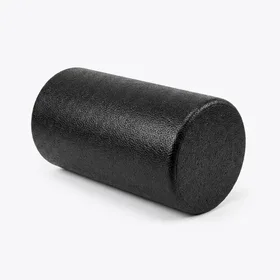
321 STRONG Foam Roller - Medium Density Deep Tissue Massager for Muscle Massage
Best for: Best value foam roller under $30
At $25.85 with nearly 29,000 reviews, the 321 STRONG delivers most of what a premium roller does for a couple of dollars less than the GRID. A solid pick for muscle recovery if review volume is what reassures you, though the gap in price has narrowed enough that the GRID is worth the stretch.
The 321 STRONG has quietly become the most reviewed foam roller on Amazon, and the 4.6 star average across 28,888 ratings tells you it is not coasting on price alone.
The medium density EVA foam sits in a useful middle ground. It is firm enough to work into knotted quads and tight IT bands, yet forgiving enough that first time users will not wince through every roll. The textured surface provides grip against muscles without the aggressive ridges of firmer options.
Where the 321 STRONG falls short of the TriggerPoint GRID is in longevity. Multiple reviewers note the surface texture begins to smooth out after six to eight months of daily use. The foam itself holds shape, but the texture that makes it effective dulls over time. At $25.85, replacing it annually still costs less than one session with a sports massage therapist.
The included exercise guide is a genuinely useful addition for anyone new to foam rolling, covering 20 recovery positions with clear illustrations.
3. Yes4All EPP Foam Roller: Best Budget Pick
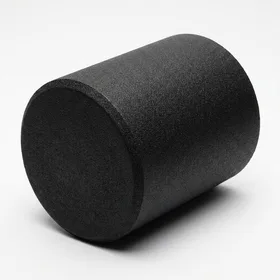
Yes4All EPP Foam Roller for Back, Legs, Physical Therapy, Exercise, Deep Tissue
Best for: Best foam roller under $15
If you want a no-nonsense foam roller under $15 that handles basic recovery work, the Yes4All EPP is hard to beat. Perfect for beginners exploring whether foam rolling fits their routine.
At $13.66, the Yes4All EPP removes most of the financial excuses not to start foam rolling. This is the best foam roller for beginners who are not sure they will stick with the habit.
The EPP (expanded polypropylene) construction is denser than it looks. Users expecting a soft, squishy roller are often surprised by the firmness. That is actually an advantage for longevity: EPP resists compression better than standard EVA foam, and reviewers report the roller maintaining its shape well past the six month mark.
The smooth surface is both the strength and limitation here. For broad muscle groups (quads, hamstrings, calves, upper back), the even pressure works well. For targeted knots and trigger points, you will wish for texture. Consider pairing this with a massage ball for pinpoint work.
Among the 684,000 products in our database, foam rollers under $15 with at least 15,000 reviews and a 4.5 star average are extremely rare. The Yes4All EPP is the only one that meets all three criteria.
Available in 12, 18, 24, and 36 inch lengths, you can size this roller to your exact needs. The 36 inch version costs a few dollars more than the 12 inch and is the best option for full back rolling.
4. TriggerPoint CORE Foam Roller: Best for Beginners
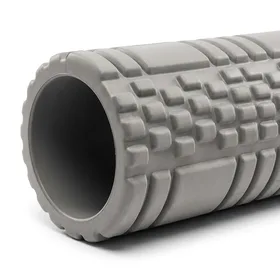
TriggerPoint CORE Foam Roller for Exercise
Best for: Best foam roller for beginners and pain-sensitive users
The TriggerPoint CORE is what you buy when the GRID looks intimidating. It is the best foam roller for someone recovering from injury or completely new to myofascial release.
TriggerPoint designed the CORE specifically for people who tried a firm roller once, hated it, and shoved it under the bed. The softer EVA foam surrounding the same rigid hollow core found in the GRID delivers enough pressure to be effective without the "good pain" that scares beginners away.
This is the foam roller physical therapists most commonly recommend for patients recovering from surgery or managing chronic conditions. The gentle texture provides mild sensory feedback without digging into sensitive tissue. For the best foam roller for back pain in people who are new to self-myofascial release, the CORE is the safest starting point.
The limitation is clear: if you train regularly and want deep tissue work, you will outgrow this roller within a few months. Think of it as training wheels. Once your muscles adapt to pressure and you understand proper rolling technique, you will likely graduate to the GRID or a firmer option.
5. Maximo Fitness Foam Roller: Best for Back Pain
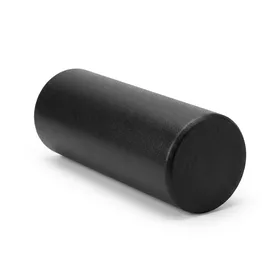
Maximo Fitness Foam Roller - 18 inch x 6 inch High Density Exercise Roller for Trigger Points
Best for: Best foam roller for back pain and trigger points
The Maximo Fitness roller is the best foam roller for back pain when you need firm, targeted pressure. Not for the faint of heart, but extremely effective for experienced users.
The Maximo Fitness roller sits at the firm end of the density spectrum, and that is exactly what makes it effective for the best foam roller for back pain. The high density EVA foam does not give much under body weight, which means it reaches deeper layers of fascia and muscle tissue that softer rollers simply cannot access.
The 18 inch length is deliberately chosen. It is long enough to span your upper back for thoracic extensions, yet short enough to isolate specific problem areas along the spine. Reviewers dealing with desk-job related upper back stiffness and lower back tightness report significant relief after consistent use.
The surface grid pattern is well designed, featuring raised nodes that target trigger points without being so aggressive that they leave bruises. That said, if you have never foam rolled before, start with a softer option first. This roller rewards proper technique and punishes bad form.
The included video library is a meaningful bonus. Back rolling requires more care than rolling your quads, and improper spinal rolling can cause more harm than good. The videos cover safe positioning and common mistakes.
6. Yes4All Premium Medium Density PE Foam Roller: Best Soft Roller
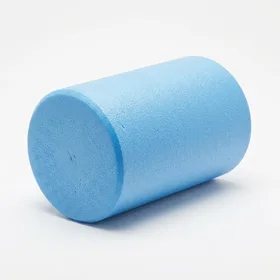
Yes4All Premium Medium Density Round PE Foam Roller for Physical Therapy
Best for: Best soft foam roller for gentle recovery and physical therapy
If you need the gentlest possible foam roller for physical therapy or post-injury recovery, the Yes4All PE roller delivers soft, even pressure at a price that makes replacement painless.
The Yes4All Premium PE roller uses polyethylene foam, which is noticeably softer than the EPP version listed above. This is not a weakness. For physical therapy patients, seniors, and anyone with heightened pain sensitivity, this softer density is exactly right.
PE foam compresses more under body weight, spreading pressure across a wider surface area. The result is a gentler, less intense rolling experience. For foam roller exercises for recovery after surgery, during rehabilitation, or for daily maintenance of stiff joints, this approach is more appropriate than aggressive deep tissue work.
The honest downside: PE foam does not last as long as EPP or EVA. Expect the roller to lose roughly 20% of its firmness after three to four months of regular use. At $9.49, replacing it twice a year costs less than $20 annually, which remains far cheaper than any professional massage.
7. Tiger Tail Massage Stick: Best Portable Option
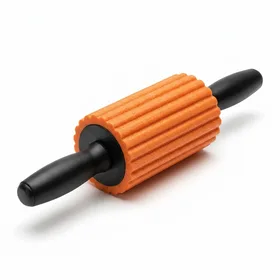
Tiger Tail 11 inch Massage Stick Portable Roller, Handheld Deep Tissue Foam Roller
Best for: Best portable foam roller for travel and targeted leg work
The Tiger Tail is not a replacement for a traditional foam roller. It is a complement. The best foam roller for legs when you are traveling, at the office, or need precision work on calves and quads.
The Tiger Tail solves a problem traditional foam rollers cannot: portability. At 11 inches and under a pound, this handheld roller fits in a gym bag or carry-on and lets you roll out sore legs anywhere, no floor space required.
The foam sleeve is firmer than you might expect from a handheld stick, and the rigid core prevents the foam from collapsing under pressure. Runners consistently praise this tool for pre-race warmups and post-race recovery on calves, quads, hamstrings, and IT bands.
The foam roller vs massage gun debate often overlooks handheld rollers entirely. The Tiger Tail sits between the two: more targeted than a floor roller, quieter and simpler than a percussion gun, and far more affordable than most massage guns worth owning. For the best foam roller for runners who travel to races, this is the pick.
The limitation is straightforward. You cannot roll your own back or spine with a handheld stick. If back pain relief is your primary goal, pair this with any of the floor rollers above.
Foam Roller Comparison: All 7 Picks Side by Side
Foam Roller Size Guide: Which Length Do You Need?
Choosing the right length depends on how you plan to use your roller.
12 to 13 inches works for targeted muscle groups (calves, glutes, arms) and fits in gym bags. The TriggerPoint GRID and 321 STRONG both use this compact size.
18 inches is the versatile middle ground. Long enough for upper back work, short enough for precise leg rolling. The TriggerPoint CORE and Maximo Fitness use this length.
24 to 36 inches is necessary for full back rolling and thoracic spine mobility. If back pain is your primary concern, the Yes4All EPP in 36 inch is the most affordable way to get full spinal coverage.
Foam Roller vs Massage Gun: Which Is Better for Recovery?
This is the most common question we see, and the answer depends on your goals.
Foam rollers excel at broad, sustained pressure across large muscle groups. They promote blood flow over a wide area and are particularly effective for fascial release. They require no batteries, no charging, and no replacement heads.
Massage guns excel at targeted, percussive therapy on specific knots. They are faster for spot treatment and easier to use on hard to reach areas like the upper back.
For most people, a foam roller covers 80% of recovery needs at 20% of the cost of a quality massage gun. Start with a roller. Add a massage gun later if you find yourself needing more targeted percussion work.
For most people, the TriggerPoint GRID at $27.99 is the best foam roller in 2026. If budget is the priority, the Yes4All EPP at $13.66 covers basic recovery work for half the price. The 321 STRONG at $25.85 sits in between with nearly 29,000 positive reviews backing it up.