The self-improvement aisle is mostly the same three ideas recycled by people with no training. These seven books are the exception: the actual science of how habits form and how behavior changes, written mostly by psychologists and behavior researchers who study it for a living. They will teach you why willpower fails, how tiny changes compound and what genuinely rewires a routine. Two of the seven are by gifted non-scientists and we label those clearly, but every one earns its place on evidence rather than hype.
Why habits belong on a health site: the behaviors these books target, movement, food, sleep, stress, are the ones that quietly decide your long-term health. Getting the mechanics of change right is upstream of almost everything else.
Quick picks:
- The practical modern classic: Atomic Habits by James Clear. View on Amazon
- The best pure science of habit: Good Habits, Bad Habits by Wendy Wood, PhD. View on Amazon
- The mindset that makes change possible: Mindset by Carol Dweck, PhD. View on Amazon
The practical playbooks
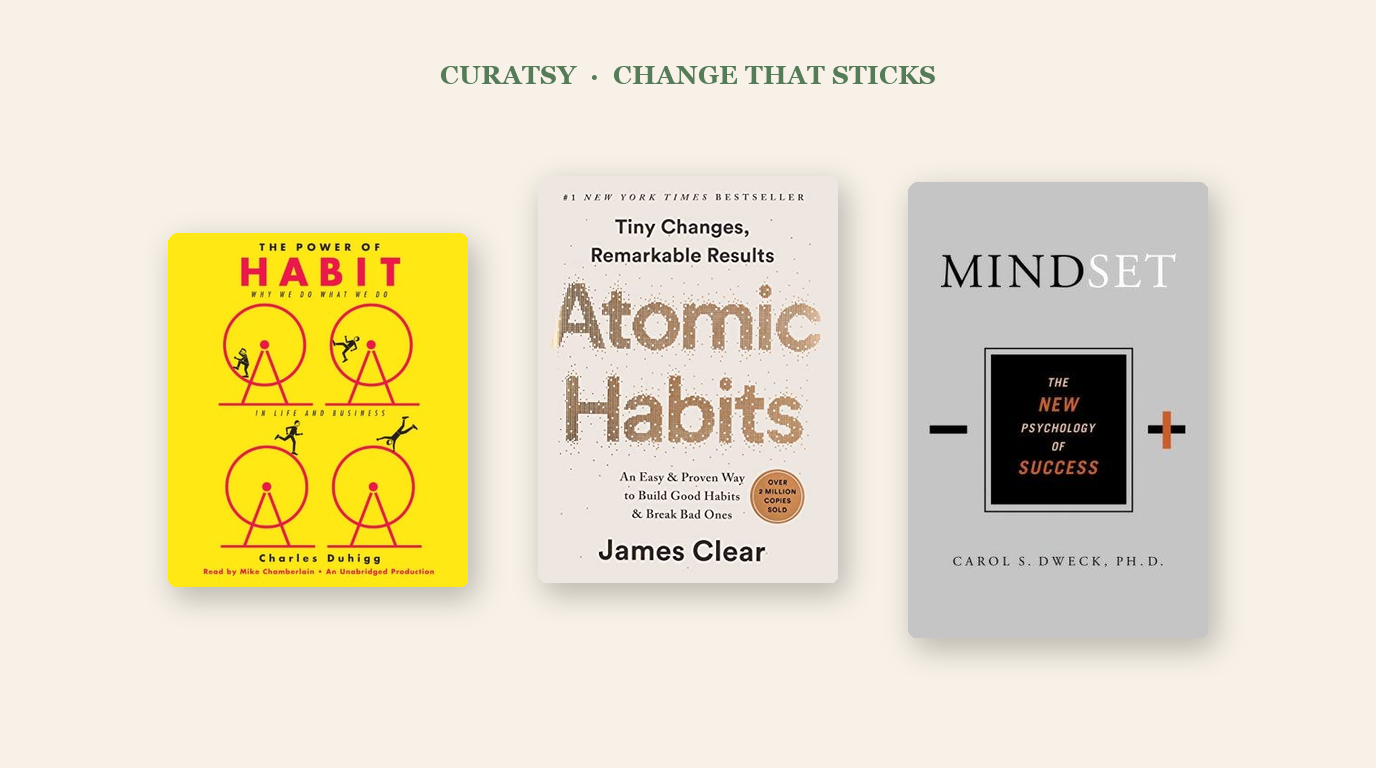
1. Atomic Habits by James Clear
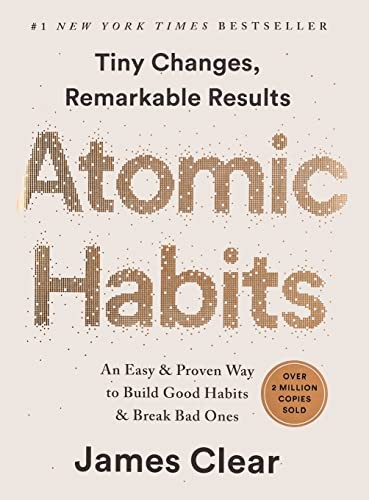
The Modern Standard for Habit Change
Clear is a writer rather than an academic, but he synthesized the behavior-change research into the clearest, most usable system available: make good habits obvious, attractive, easy and satisfying and reverse those for bad ones. It became the default habit book for a reason, it actually works when you apply it. The one to start with.
Read this if you loved: A simple, immediately actionable framework you can use tonight.
Honest note: Clear is a synthesizer, not a researcher, so treat it as a brilliant distillation rather than original science. That distillation happens to be the most practical thing on this list.
→ Buy on Amazon2. Tiny Habits by BJ Fogg, PhD
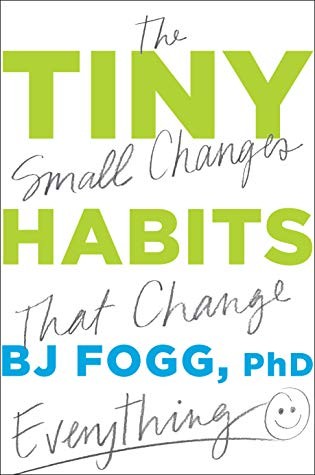
Start Absurdly Small
Fogg runs a behavior lab at Stanford and his core insight is that lasting change comes from starting so small it feels trivial: two push-ups, one flossed tooth. His model of behavior (motivation, ability, prompt) is the academic engine under a lot of popular habit advice. For anyone who has failed by aiming too big, this is the corrective.
Read this if you loved: Permission to start ridiculously small and let it grow.
Honest note: The relentlessly upbeat tone can feel like a lot. The underlying behavior model is rigorous and genuinely useful.
→ Buy on AmazonThe science of why we do what we do
3. Good Habits, Bad Habits by Wendy Wood, PhD
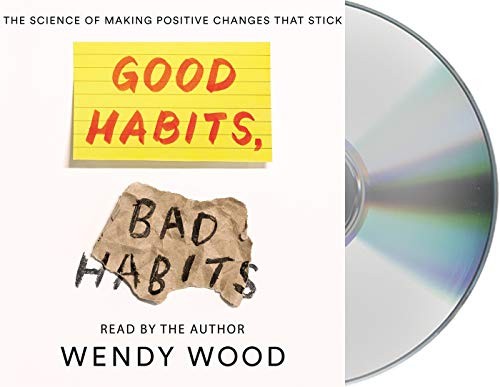
The Definitive Research on Habit
Wood is a psychologist who spent decades studying habit specifically and this is the most authoritative science-first book on the subject. Her central finding is bracing: about 43 percent of what we do is habitual, driven by context far more than conscious choice, which means changing your environment beats relying on willpower. The deepest, most evidence-grounded book here.
Read this if you loved: The actual research beneath the popular habit advice.
Honest note: It is more explanatory than a step-by-step program. Pair it with Atomic Habits for the how-to and you have the complete picture.
→ Buy on Amazon4. How to Change by Katy Milkman, PhD
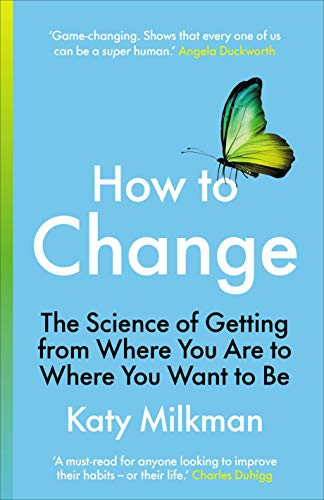
A Scientist's Toolkit for Change
Milkman is a behavioral scientist at Wharton and this book matches specific obstacles (impulsivity, procrastination, forgetting) to specific, research-tested tactics like temptation bundling and fresh starts. It is the most tailored approach on the list: not one system for everyone, but the right tool for your particular sticking point. Rigorous and refreshingly practical.
Read this if you loved: Matching a proven tactic to the exact reason you keep failing.
Honest note: It reads a little like a well-organized toolkit rather than a single big idea. That modularity is precisely its strength.
→ Buy on Amazon5. Willpower by Roy Baumeister, PhD and John Tierney
Understanding Self-Control
Baumeister is one of the most cited psychologists on self-control and, with journalist John Tierney, he explains how willpower works, why it depletes and how to structure your life so you depend on it less. It is the readable overview of decades of self-control research from the researcher who led much of it. A useful complement to the habit-first books.
Read this if you loved: Understanding the mechanics of self-control from the source.
Honest note: Some of the original willpower-depletion findings have been debated in the years since, so hold the strongest claims loosely. The practical advice, reduce reliance on willpower, still stands.
→ Buy on AmazonThe mindset underneath it all
6. Mindset by Carol Dweck, PhD
Why You Believe You Can Change
Dweck is a Stanford psychologist whose research on fixed versus growth mindset is among the most influential in modern psychology. The idea is simple and powerful: believing your abilities can grow changes how you respond to difficulty, which changes what you actually achieve. It is the belief that makes every other habit book possible, if you think you cannot change, you will not try.
Read this if you loved: The single belief that underlies all durable self-improvement.
Honest note: The concept has been oversimplified and oversold in schools and business and some replications are mixed. The core research is real and the reframing is genuinely useful.
→ Buy on Amazon7. The Power of Habit by Charles Duhigg
How Habits Work, Told Through Stories
This is our journalist pick and it is the book that popularized habit science for everyone. Duhigg is a reporter who explains the cue-routine-reward loop through gripping stories, from toothpaste marketing to Olympic training. It is the most enjoyable read on the list and the best on-ramp if the research-heavy books feel intimidating.
Read this if you loved: Learning the science through stories you cannot put down.
Honest note: It is journalism rather than original research, so treat the framework as a well-reported synthesis. As the most readable introduction to how habits work, it is unbeaten and clearly labeled as reporting.
→ Buy on AmazonHow we chose these
We applied our rule: if we could not verify the author's research credential in about two minutes, the book did not make the list, unless it is a clearly labeled synthesis by a gifted non-scientist. What remains is a set of psychologists and behavior researchers (Wendy Wood, BJ Fogg, Katy Milkman, Roy Baumeister, Carol Dweck) plus two openly labeled non-academics: James Clear, a writer who distills the research superbly and Charles Duhigg, a journalist. No hustle-culture gurus, no willpower-shaming.
Prefer to listen? Atomic Habits and The Power of Habit both make excellent audiobooks. If you do not have a subscription yet, an Audible trial gets you the first listen at no cost.