Few subjects are as swamped with myth, fear and unsolicited pressure as pregnancy and parenting. These six books are the antidote. Every author is an economist, a physician, a dietitian, or a researcher and every one replaces "because I said so" with actual evidence, on the decisions that matter most: what is truly risky in pregnancy, how to feed and sleep-train a baby, how a child's brain develops and how to raise kids in the age of the smartphone. This is the calm, credentialed shelf for a subject that badly needs one.
A note before you buy: these are books, not medical advice. Pregnancy and children's health are individual and sometimes urgent, so use these reads to get informed and then bring your questions to your own OB-GYN or pediatrician, who knows your situation.
Quick picks:
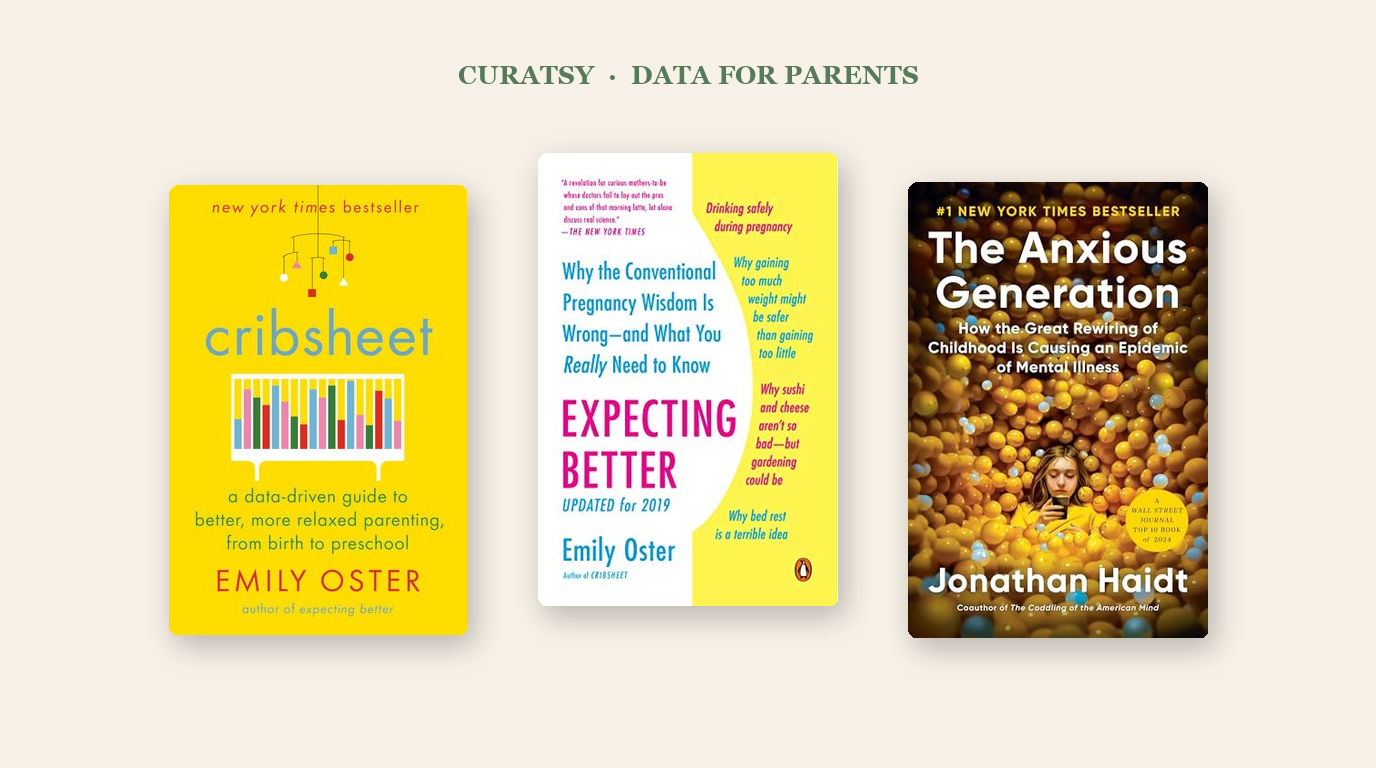
- The essential pregnancy book: Expecting Better by Emily Oster, PhD. View on Amazon
- The data-driven early-parenting guide: Cribsheet by Emily Oster, PhD. View on Amazon
- The book on kids and screens everyone is discussing: The Anxious Generation by Jonathan Haidt, PhD. View on Amazon
Pregnancy, by the evidence
1. Expecting Better by Emily Oster, PhD
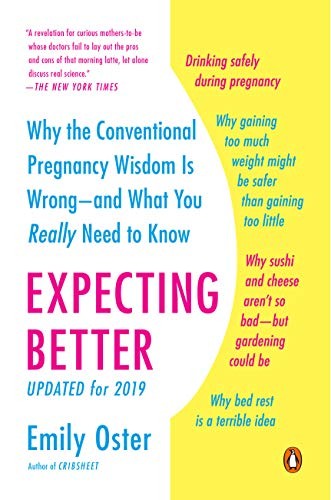
The Myth-Busting Pregnancy Guide
Oster is an economist who did what few pregnancy books do: she read the actual studies behind the long list of pregnancy rules and reported what the evidence really says, from coffee to deli meat to the occasional glass of wine. It is not a license to ignore your doctor, it is a tool to understand the real risks so you can make informed choices instead of anxious ones. The pregnancy book smart, questioning people actually trust.
Read this if you loved: Seeing the data behind rules you were told to follow blindly.
Honest note: She is an economist, not an obstetrician and she is clear that you should decide with your own doctor. Read it as evidence to discuss, not a replacement for prenatal care.
→ Buy on Amazon2. Real Food for Pregnancy by Lily Nichols, RDN
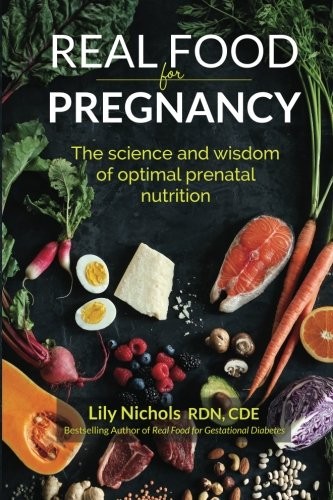
The Nutrition Reference
Nichols is a registered dietitian who specializes in prenatal nutrition and this is the deeply researched, no-hype guide to eating well while pregnant. It goes far past the standard advice into what actually supports a healthy pregnancy, all grounded in citations rather than trends. For anyone who wants to get the nutrition part genuinely right, this is the reference.
Read this if you loved: A dietitian citing the research rather than repeating folklore.
Honest note: It is detailed and can feel like a lot to implement perfectly. Take the core principles and do not let the completeness become one more source of pressure.
→ Buy on AmazonThe early years
3. Cribsheet by Emily Oster, PhD
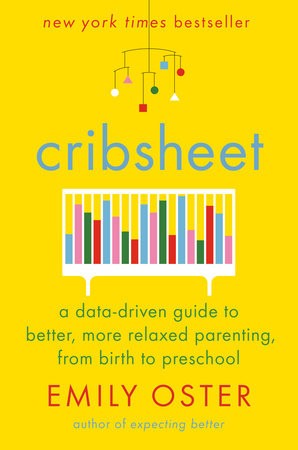
Data for the First Three Years
Oster's follow-up to Expecting Better applies the same evidence-first approach to the exhausting decisions of early parenting: breastfeeding, sleep training, screen time, potty training and the guilt attached to all of them. It will not tell you what to do, it will show you what the data actually supports so you can stop agonizing over choices that matter less than the internet claims. Deeply reassuring for anxious new parents.
Read this if you loved: Expecting Better, continued into the baby-and-toddler years.
Honest note: As with her pregnancy book, this is decision support, not medical advice from your pediatrician. Its gift is lowering the emotional temperature of hard choices.
→ Buy on Amazon4. Healthy Sleep Habits, Happy Child by Marc Weissbluth, MD
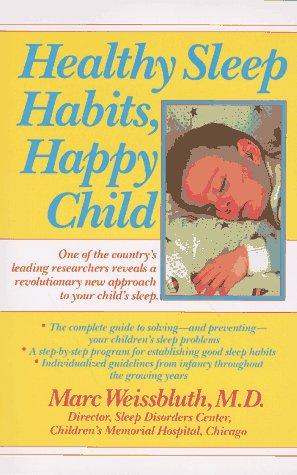
The Classic on Baby and Child Sleep
Weissbluth is a pediatrician who spent a career studying children's sleep and this is one of the foundational references on the subject. It explains how sleep develops from infancy onward and lays out approaches to help your child (and therefore you) sleep, with the depth of someone who has seen it all in clinic. For sleep-deprived parents, it is a genuine lifeline.
Read this if you loved: A pediatrician's thorough, been-there guide to the thing you need most: sleep.
Honest note: It is dense and firm on method and sleep approaches are personal and sometimes contentious. Take the science and adapt the specifics to your family and your pediatrician's guidance.
→ Buy on AmazonRaising kids in the modern world
5. The Whole-Brain Child by Daniel Siegel, MD and Tina Payne Bryson, PhD
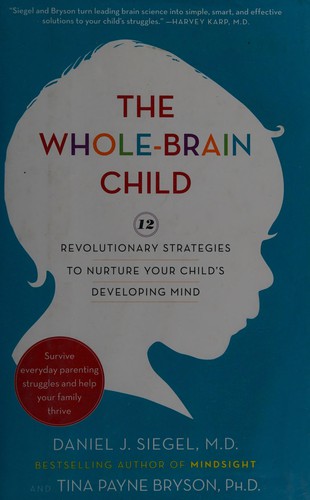
How to Parent With the Brain in Mind
Siegel is a clinical psychiatrist and Bryson a psychotherapist and together they translate child brain development into practical parenting strategies. The book gives you a simple, science-based framework for handling tantrums, big feelings and everyday conflict in ways that actually build a child's emotional skills. It is the rare parenting book that is both warm and grounded in neuroscience.
Read this if you loved: Understanding what is happening in your child's brain during a meltdown.
Honest note: The brain science is simplified into metaphors, which purists may find loose. As practical, humane strategy, it works remarkably well.
→ Buy on Amazon6. The Anxious Generation by Jonathan Haidt, PhD
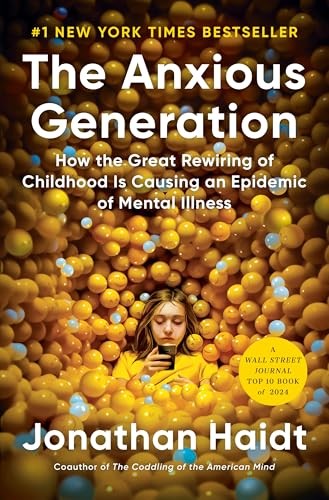
The Case Against the Phone-Based Childhood
Haidt is a social psychologist who marshals the evidence that the shift to smartphone-and-social-media childhoods is linked to a real rise in youth anxiety and depression. Whether or not you accept every claim, it is the most important, most discussed book on how screens are reshaping kids and it comes with concrete, sensible recommendations. Essential reading for any parent of a child near a phone.
Read this if you loved: A serious, evidence-driven argument about the biggest parenting question of the decade.
Honest note: Some researchers argue the phone-harm link is correlation more than proven cause and Haidt states his case strongly. Even skeptics agree the precautionary advice is reasonable.
→ Buy on AmazonHow we chose these
We applied our rule: if we could not verify the author's credential from a publisher or university bio in about two minutes, the book did not make the list. What remains is an economist known for rigorous data work, a prenatal dietitian, a pediatrician, a clinical psychiatrist and a psychotherapist and a leading social psychologist. No mommy-blog absolutism, no fear-based marketing, no one telling you there is only one right way.
Prefer to listen? Expecting Better and The Anxious Generation both make excellent audiobooks. If you do not have a subscription yet, an Audible trial gets you the first listen at no cost.