Almost everything you read about sleep online is written by someone selling a mattress, a supplement, or a course. So we applied one filter and only one: who wrote it. Every book below is by a sleep scientist, a neurologist, or a clinical psychologist who treats insomnia for a living. Every single author on this list holds a PhD or an MD in a sleep-relevant field. No biohackers, no gurus, no miracle protocols.
One note before you buy: these are books, not medical advice. If you have chronic insomnia or a suspected sleep disorder like apnea, see a doctor, because some conditions need real diagnosis and treatment. The value of the books below is understanding your sleep and, in several cases, following the one behavioral method that genuinely works.
Quick picks:
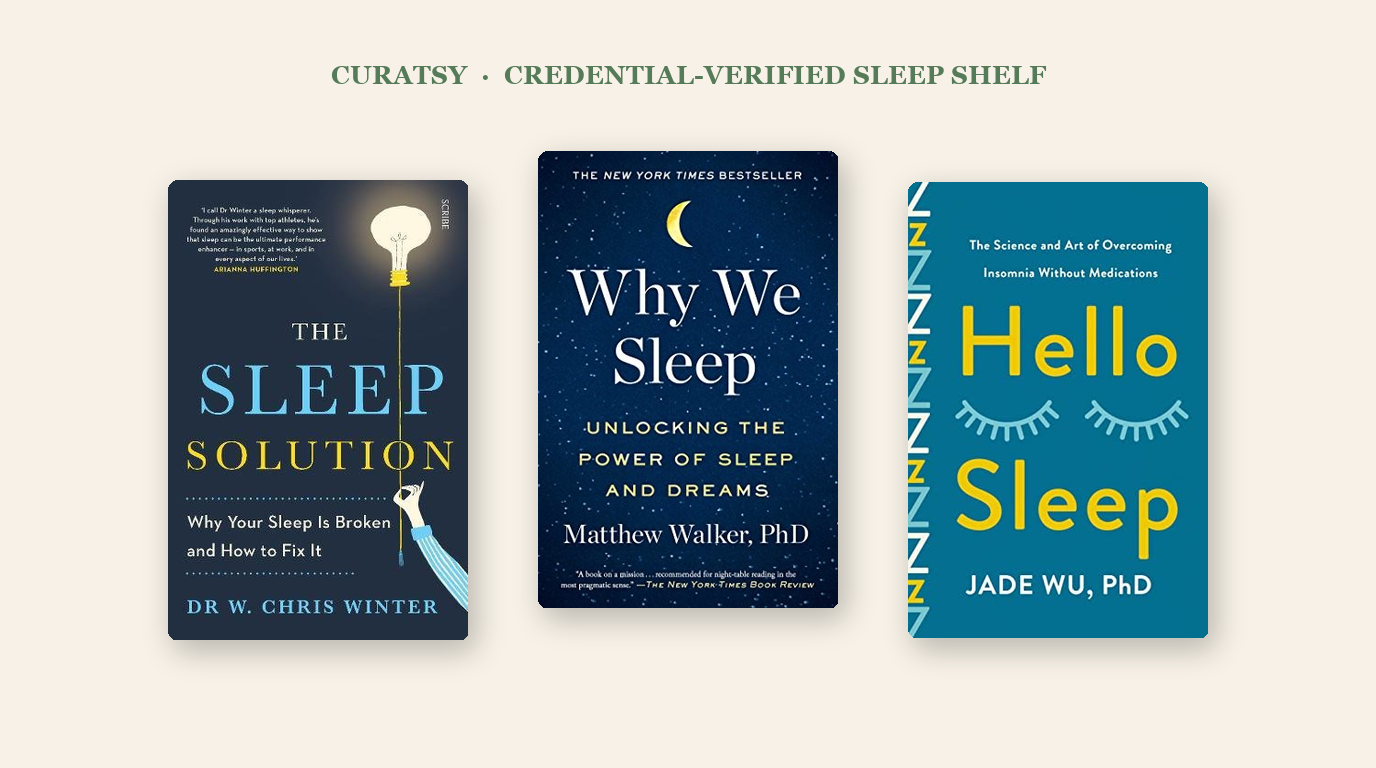
- The one everyone should read first: Why We Sleep by Matthew Walker, PhD. View on Amazon
- The best if you actually can't sleep: Hello Sleep by Jade Wu, PhD. View on Amazon
- The best practical, no-nonsense guide: The Sleep Solution by W. Chris Winter, MD. View on Amazon
The essential science
1. Why We Sleep by Matthew Walker, PhD
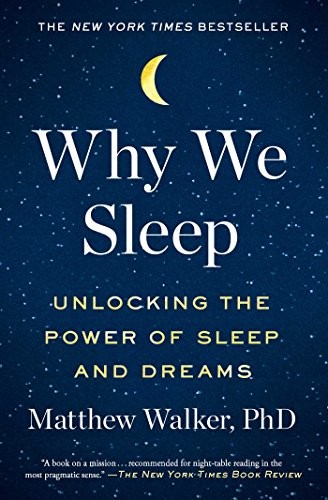
The Book That Made the World Take Sleep Seriously
Walker, a neuroscientist and sleep researcher, wrote the book that turned sleep from an afterthought into a headline. It is a sweeping, readable tour of what sleep does for memory, mood, immunity and longevity and it will genuinely change how much you prioritize it. More than any other title here, this is the one that makes you go to bed earlier.
Read this if you loved: Behave by Robert Sapolsky, or you want the single best argument for why sleep matters.
Honest note: Some scientists have flagged a few of Walker's claims as overstated. The core message, that sleep is foundational to health, is rock solid, but read the boldest specifics as motivation rather than gospel.
→ Buy on Amazon2. The Nocturnal Brain by Guy Leschziner, MD
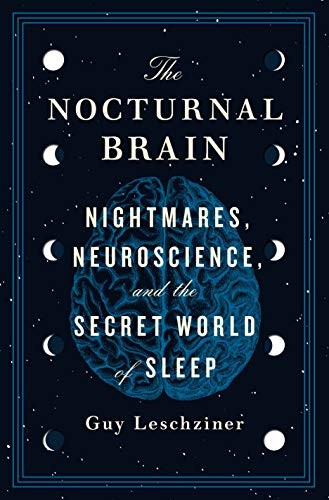
Sleep at Its Strangest
Leschziner is a consultant neurologist at a major sleep clinic and this is sleep told through his most extraordinary patients: sleepwalkers who cook full meals, people who act out their dreams, the truly rare disorders that reveal how sleep actually works. It is part science, part Oliver Sacks-style case study and completely absorbing.
Read this if you loved: The Man Who Mistook His Wife for a Hat, or you find the weird edges of the brain irresistible.
Honest note: It is more a fascinating tour of sleep disorders than a how-to-sleep-better guide. Come for the wonder, not a protocol.
→ Buy on AmazonIf you actually can't sleep (the CBT-I books)
The evidence-based treatment for chronic insomnia is not a pill. It is a behavioral method called CBT-I (cognitive behavioral therapy for insomnia) and every book in this section is built on it. If you take one thing from this list, take this.
3. Hello Sleep by Jade Wu, PhD
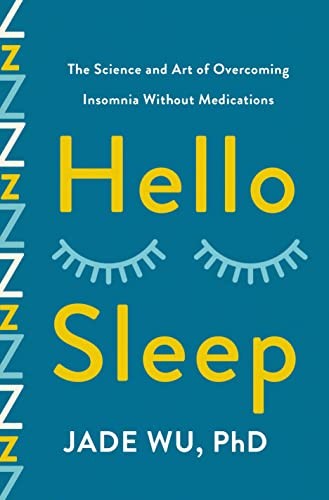
The Best Modern Guide to Beating Insomnia
Wu is a behavioral sleep medicine specialist and this is the warmest, most current CBT-I book for the ordinary bad sleeper. She reframes the anxious, try-hard relationship most insomniacs have with sleep and walks you through the actual method with real compassion. If you lie awake fighting your own brain, start here.
Read this if you loved: The idea that you can fix sleep by changing behavior rather than swallowing something.
Honest note: CBT-I asks you to do slightly counterintuitive things, like spend less time in bed at first. It works, but it takes a few uncomfortable weeks of consistency.
→ Buy on Amazon4. Say Good Night to Insomnia by Gregg Jacobs, PhD
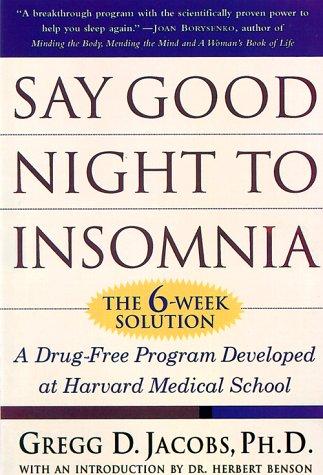
The Harvard Program That Started It
Jacobs developed his drug-free insomnia program at Harvard Medical School and this is the classic, clinically tested six-week plan that put CBT-I on the map. It is more structured and program-like than Hello Sleep, which is exactly what some people need: a clear week-by-week path out of insomnia.
Read this if you loved: A concrete plan with steps and a timeline rather than general principles.
Honest note: The tone is a little more clinical and dated than the newer picks. The method underneath is proven and still works.
→ Buy on Amazon5. Quiet Your Mind and Get to Sleep by Colleen Carney and Rachel Manber, PhDs
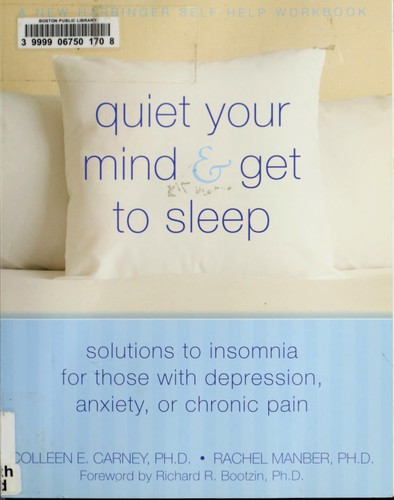
The Workbook for a Racing Mind
Carney and Manber are leading CBT-I researchers and this is the practical workbook for people whose main problem is a brain that will not switch off at night. It is especially good if anxiety or low mood tangles with your sleep, giving you the tools rather than just the theory. The most hands-on book on the list.
Read this if you loved: A workbook you fill in, not just a book you read.
Honest note: It is a workbook, so you get out what you put in. Skim it and it does nothing; work it and it delivers.
→ Buy on AmazonThe practical guides
6. The Sleep Solution by W. Chris Winter, MD
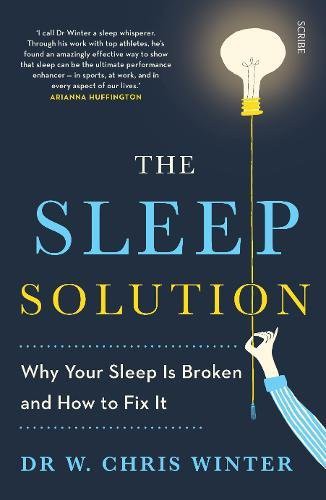
The No-Nonsense Doctor's Take
Winter is a neurologist and sleep specialist and this is the friendly, funny, straight-talking guide to fixing your sleep without the doom. He cuts through myths, explains what is actually going wrong and hands you practical fixes in a voice that feels like a smart friend who happens to run a sleep clinic. The most approachable practical pick.
Read this if you loved: A doctor who is reassuring and funny rather than alarming.
Honest note: It ranges wide across every sleep topic, so it is less of a single focused program than the CBT-I books. Great as a first read.
→ Buy on Amazon7. The Sleep Prescription by Aric Prather, PhD
Seven Days, Small Changes
Prather is a UCSF sleep scientist and this compact book distills the science into a short, practical seven-day set of adjustments. It is the one to hand someone who will never read a 350-page book but might follow a week of small, doable steps. Tiny, evidence-based and quick.
Read this if you loved: A short book you finish in one sitting and can act on immediately.
Honest note: By design it is brief, so serious insomnia still points you to the fuller CBT-I books above. As a gentle starting nudge, it is excellent.
→ Buy on AmazonYour body clock
8. Internal Time by Till Roenneberg, PhD
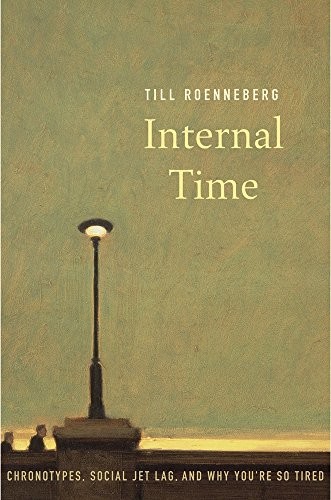
Why You Are a Night Owl (and It's Not Your Fault)
Roenneberg is a chronobiologist who coined the term social jet lag and this is the definitive book on circadian rhythms: why some of us are wired to be night owls, why school and work schedules fight our biology and what that costs us. It reframes a lot of guilt about when you naturally sleep.
Read this if you loved: Why We Sleep and you want to go deeper on the body clock specifically.
Honest note: It leans more academic than the others, closer to popular science than self-help. Read it for understanding, not a bedtime routine.
→ Buy on AmazonHow we chose these
We applied the rule most sleep content fails: if we could not verify the author's credential from a publisher or university bio in about two minutes, the book did not make the list. What remains is a clean sweep, every author a PhD sleep scientist, a chronobiologist, an MD neurologist, or a clinical psychologist who treats insomnia. No supplement sellers, no biohackers, no mattress affiliates dressed up as experts.
Once you understand the science, the other half is your bedroom. See our companion guide to the best sleep environment upgrades, the dark, quiet and cool gear that puts the research into practice.
Prefer to listen? Every one of these makes an excellent audiobook and Why We Sleep in particular is a joy narrated. If you do not have a subscription yet, an Audible trial gets you the first listen at no cost.