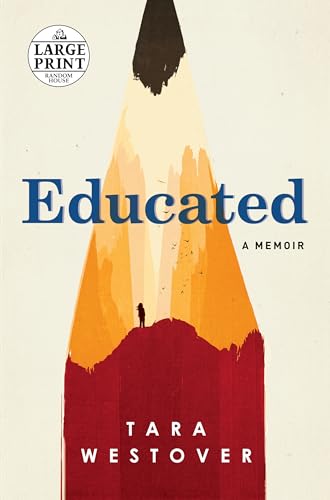
Tara Westover was seventeen the first time she set foot in a classroom. That single fact powers one of the most celebrated memoirs of the past decade, a book that stayed on the New York Times bestseller list for years, landed on Barack Obama's and Bill Gates's reading lists, then quietly became the standard against which every coming-of-age memoir since has been measured. It earns the attention.
What it's about
Westover grew up in rural Idaho, the youngest child of a survivalist Mormon family that distrusted the government, hospitals, public schools; her father ran a junkyard, her mother worked as an unlicensed midwife and herbalist. There was no birth certificate for years, no doctor visits after gruesome injuries, no formal education of any kind. The family prepared for the End of Days while the outside world carried on without them.
The book traces how Westover clawed her way out. Self-taught enough to pass the ACT, she entered Brigham Young University knowing almost nothing of the world beyond her mountain; she had never heard of the Holocaust. From there the story climbs through Cambridge and Harvard toward a PhD, though the real drama is internal. Every step toward education pulls her further from a family she loves, including a violent older brother whose abuse the family refuses to acknowledge.
Why everyone's talking about it
Educated hit in 2018 at the exact moment America was arguing about rural isolation, distrust of institutions and the limits of family loyalty, so it read as both a personal story and a national one. But the durable appeal is simpler: Westover writes with startling control, refusing easy villains. Her father is terrifying yet loved; her mother's complicity is rendered with sorrow rather than score-settling. Book clubs have never really let go of it, because the central question, what do you owe the people who raised you, has no comfortable answer.
The verdict, for now
This is a genuinely great memoir, one of the rare mega-bestsellers that deserves its reputation. The prose is clean, the self-examination is honest; Westover openly flags where her memory conflicts with others' accounts, which builds trust rather than eroding it. Two caveats worth knowing. Members of her family have publicly disputed parts of the story, a controversy readers should hold in mind as they would with any memoir. The middle section also cycles through similar patterns of rupture and return with her family, which some readers find repetitive even as it mirrors how abuse actually works. Neither complaint dims the whole. Read it before someone spoils the ending of a life still being written.
Read it if you loved
Ready to read Educated?
Get it on Amazon →