Walter Isaacson spent two years shadowing the most polarizing figure in modern business, sitting in on meetings, launches, meltdowns. The result is a 600-plus page portrait of Elon Musk that reads less like a victory lap than a psychological case study. Whether you admire Musk or can't stand him, this became the most argued-about business biography of 2023 for good reason.
What it's about
Isaacson traces Musk from a brutal childhood in Pretoria, where he was beaten by schoolmates and belittled by a cruel father, through the early Zip2 and PayPal windfalls, then into the empire years: SpaceX, Tesla, Neuralink, the Boring Company. The final third covers the chaotic acquisition of Twitter almost in real time, with Isaacson present as Musk fired executives, slept in the office and rebranded the platform as X. Few biographers have ever had this level of fly-on-the-wall access to a subject at the peak of his power.
The book's central question is whether the achievements are separable from the cruelty. Isaacson keeps returning to what Musk's colleagues call "demon mode": the sudden, scorched-earth rages that leave engineers gutted yet sometimes produce impossible results. He roots much of this in the father Musk swore he would never become, a framing that gives the book its emotional spine. It is a study of drive as damage, told through rocket explosions, production-line crises and 2 a.m. ultimatums.
Why everyone's talking about it
The book landed in the middle of Musk's loudest era and has never really left the conversation. The Starlink-Ukraine passage sparked a genuine news cycle, forcing Isaacson to clarify details about whether Musk disabled or simply declined to extend coverage during a planned attack. Every new Musk controversy, political or corporate, sends readers back to this book as the closest thing to a source document on how he actually operates.
The verdict, for now
This is the definitive access-driven account of Musk, which is not the same as the definitive judgment of him. The fair criticism is that Isaacson stands too close to his subject; he often presents the "great things require hard men" thesis without seriously pressure-testing it, so the book can feel more like meticulous stenography than analysis. The short, choppy chapters also flatten big moments. Read it for the extraordinary reporting; bring your own conclusions about what it all means.
Read it if you loved
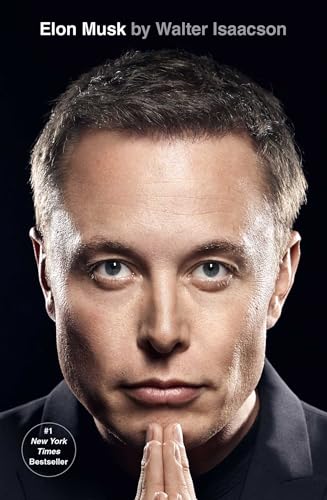
Ready to read Elon Musk?
Get it on Amazon →