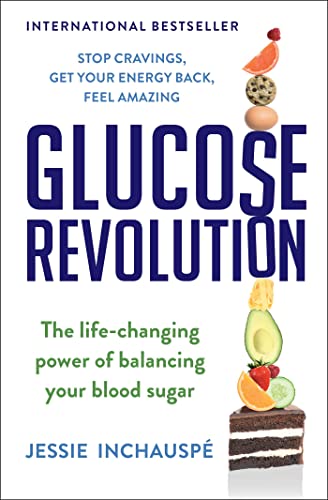
Jessie Inchauspé turned a niche corner of metabolic science into one of the biggest wellness phenomena of the decade. Glucose Revolution, published in 2022, argues that the hidden driver behind cravings, fatigue, skin issues and long-term disease risk is the glucose spike: the sharp rise in blood sugar that follows many modern meals. Her promise is seductive because it asks so little. Keep eating what you love; just change how you eat it.
What it's about
Inchauspé, a French biochemist who built a massive following as the Glucose Goddess on Instagram, opens with a primer on how glucose works in the body. She explains why flattening the curve matters, drawing on continuous glucose monitor data and published research to connect repeated spikes with insulin resistance, inflammation and energy crashes. The tone is friendly rather than clinical; hand-drawn glucose graphs do much of the explanatory work.
The heart of the book is a set of ten practical hacks. Eat food in the right order, with vegetables first, protein and fat next, starches and sugars last. Start the day with a savory breakfast instead of a sweet one. Take a spoonful of vinegar in water before a carb-heavy meal. Move your muscles for ten minutes after eating. Put "clothing" on your carbs by pairing them with fat, fiber or protein. None of it requires calorie counting, elimination diets or willpower theatrics, which is precisely why the approach spread so fast.
Why everyone's talking about it
The book became an international bestseller, translated into dozens of languages, riding a wave of interest in metabolic health that also swept up continuous glucose monitors and low-carb influencers. Inchauspé's graphs became a visual language of their own; millions of people started sequencing their meals or sipping vinegar because of this book. Few nutrition titles in recent memory have converted readers into practitioners so quickly.
The verdict, for now
As an entry point to metabolic health, this is a genuinely useful book: clear, actionable and far gentler than most diet literature. But the criticism it has drawn is worth taking seriously. Several researchers have pointed out that the harms of moderate glucose spikes in healthy, non-diabetic people are not well established; the vinegar effect, while real, is modest; some of the book's claims run ahead of the evidence. There is also an irony in a program this obsessed with glucose telling readers not to obsess. Read it for the habits, which are low-risk and sensible. Hold the more sweeping health promises loosely.
Read it if you loved
Ready to read Glucose Revolution?
Get it on Amazon →