Sapiens made Yuval Noah Harari the rare historian whose books get read on beaches and in boardrooms alike. Nexus is his most timely follow-up, a sweeping history of information networks that lands exactly as the world is trying to figure out what artificial intelligence means for everything. It is Harari doing what he does best: zooming all the way out until the present looks strange again.
What it's about
The book's organizing idea is that the story of humanity is really the story of information: how we store it, share it and control it. Harari runs from the first campfire myths and clay tablets through holy books, printing presses and bureaucracies to the algorithms now shaping what billions of people see and believe. His central, bracing claim is that information is not the same thing as truth. Networks spread useful fictions as readily as facts and the ones that win are not the most accurate but the most effective at binding people together.
That framing sets up the book's real target: AI. Harari argues that artificial intelligence is a genuine rupture, the first tool in history that can generate ideas and make decisions without us, which makes it less a tool than a new kind of actor in the network. The stakes, he warns, are nothing less than who gets to decide what is real.
Why everyone's talking about it
Anything Harari writes becomes an instant event and Nexus arrived precisely as AI anxiety went mainstream, giving readers a grand historical frame for the technology dominating the headlines. It is provocative, quotable and built for exactly the debate the world is currently having.
If you love big-idea nonfiction that connects the deep past to the near future, this is prime Harari. Readers who want narrow, rigorously sourced argument should know his mode is sweeping synthesis and specialists often quibble with how much he compresses. Come for the millennia-spanning history and stay for a genuinely unsettling case about AI and truth.
The verdict, for now
Read it, especially if the AI conversation has you reaching for context. Come for the grand history of information, stay for a warning about what happens when the network starts thinking for itself. Few writers can make ten thousand years feel this urgent.
Read it if you loved
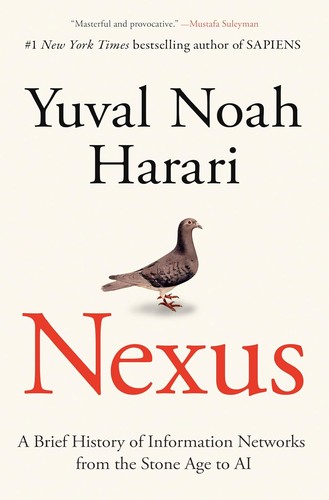
Ready to read Nexus?
Get it on Amazon →