Some books get called classics out of politeness. This one earned the label by rewiring what fiction could do. Gabriel García Márquez's 1967 chronicle of the Buendía family turned the invented town of Macondo into one of literature's permanent addresses. Nearly six decades later it still stuns first-time readers, while a lavish Netflix adaptation has pushed it back into the center of the conversation.
What it's about
The novel follows seven generations of the Buendía family in Macondo, a town founded in the Colombian wilderness by the patriarch José Arcadio Buendía and his formidable wife Úrsula. What happens to them is history told as fever dream: a plague of insomnia, a rain that lasts years, a beautiful girl who ascends into the sky while folding laundry, traveling gypsies who present ice and magnets as if they were miracles. García Márquez narrates all of it in the same calm, matter-of-fact voice, which is the whole trick. The magical feels ordinary; the ordinary feels magical.
Underneath the spectacle sits a serious book about Latin America. The banana company that arrives, exploits the town, then erases the memory of a massacre draws directly on the real 1928 killings of striking workers in Colombia's banana zone. Civil wars, foreign capital, forgetting as national policy: Macondo compresses a century of the region's history into one family's rise and ruin. The Buendías recycle names across generations (the many Aurelianos and José Arcadios) because the book's deepest subject is time moving in circles rather than lines.
Why everyone's talking about it
García Márquez won the Nobel Prize in Literature in 1982, with this novel as the centerpiece of his case. It has sold tens of millions of copies in dozens of languages, a rare feat for a book this formally daring. The freshest spike in attention comes from Netflix, which released the first part of a Spanish-language series adaptation in late 2024, filmed in Colombia with the involvement of the author's family. Every adaptation debate sends a new wave of readers back to the source.
The verdict, for now
This is one of the handful of novels that genuinely changed literature; magical realism as a global movement is hard to imagine without it. It is also a demanding read. The repeated names confuse nearly everyone (keep the family tree handy), there is almost no dialogue, the paragraphs run long. Readers who need a driving plot may stall halfway. But readers who surrender to the voice tend to come out the other side changed. Few books reward patience this generously.
Read it if you loved
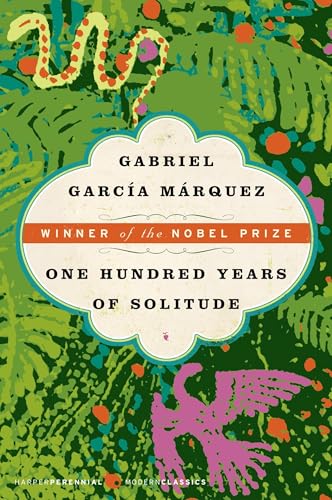
Ready to read One Hundred Years of Solitude?
Get it on Amazon →