Some novels age into curiosities. The Handmaid's Tale aged into a warning label. Margaret Atwood published it in 1985; four decades later it still sits on bestseller lists, syllabi, banned-book lists (often all three at once). Few works of speculative fiction have stayed this current for this long, which says less about the book than about the world it keeps describing.
What it's about
The United States has fallen. In its place stands Gilead, a theocratic regime built in response to a fertility crisis, where women are stripped of property, jobs, names. The narrator, known only as Offred, is a Handmaid: a woman assigned to a powerful Commander's household for one purpose, bearing children for the ruling class. Her old life, a husband, a daughter, a job, exists only in memory.
Atwood tells the story through Offred's fragmented, present-tense narration, which moves between the suffocating rituals of Gilead and flashbacks to how quickly normal life unraveled. Atwood has said she included nothing in the book without a historical precedent somewhere in the real world. That constraint is the novel's engine. Gilead never feels invented; it feels assembled from things that have already happened.
Why everyone's talking about it
The Hulu adaptation that launched in 2017 turned the book into a global visual shorthand; the red cloak with the white bonnet now appears at protests on multiple continents. Atwood's 2019 sequel, The Testaments, won the Booker Prize while renewing interest in the original. Meanwhile the novel remains one of the most frequently challenged books in American schools, which reliably sends new readers straight to it. Every fresh debate over reproductive rights seems to put it back in the conversation.
The verdict, for now
This is essential reading, though not flawless reading. The pacing is deliberately airless; readers expecting dystopian thriller momentum may find Offred's interiority slow, since she observes far more than she acts. The famously ambiguous ending frustrates some people, while the epilogue's academic framing divides opinion. Critics have also fairly noted that Gilead's treatment of race is mostly waved away in a few lines, a gap the TV series had to confront directly. None of that dents the core achievement: a first-person voice so intimate that totalitarianism stops being an abstraction. You do not finish it feeling entertained. You finish it feeling watched, which is exactly the point.
Read it if you loved
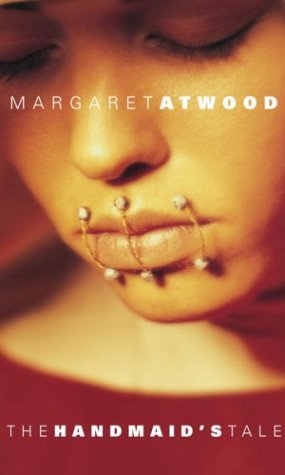
Ready to read The Handmaid's Tale?
Get it on Amazon →