Long before feminist retellings of ancient myth became their own shelf at the bookstore, Chitra Banerjee Divakaruni handed the Mahabharata to the woman standing at its center. The Palace of Illusions retells India's great epic through the eyes of Panchaali, the fire-born princess who marries all five Pandava brothers. Nearly two decades after its 2008 debut, it is still the book readers name first when the conversation turns to mythology told from the margins.
What it's about
Panchaali emerges from a sacrificial fire with a prophecy hanging over her: she will change the course of history. Divakaruni follows her from a restless childhood in her father's gloomy palace through a swayamvara that binds her, by her mother-in-law Kunti's decree, to five husbands at once. She gains a magical palace built for the Pandavas, loses it in a rigged game of dice, endures public humiliation at the Kaurava court, then spends years in exile before the apocalyptic war of Kurukshetra arrives to settle every score.
What makes the novel more than a plot summary of the epic is its interior life. Panchaali's closest confidant is Krishna, who drifts in whenever her certainties need puncturing. Her most dangerous secret is a lifelong fascination with Karna, the enemy her pride once humiliated. Divakaruni frames her as a sharp, ambitious woman trying to steer a story that men keep writing around her; the palace itself becomes a symbol of everything a woman can build yet cannot keep.
Why everyone's talking about it
The mythological retelling boom owes this book a debt. Readers who arrived through Circe or Kaikeyi keep discovering that Divakaruni ran this play more than a decade earlier, which is why the novel keeps resurfacing on recommendation lists, syllabi and book club slates. In India it has been a fixture of English-language fiction shelves since release. For many diaspora readers it also doubles as a doorway back into an epic they half-remember from childhood, told in a voice that feels contemporary without abandoning the grandeur.
The verdict, for now
The Panchaali of these pages is worth meeting: proud, funny, wounded, more honest with the reader than with anyone in her world. That said, purists have real complaints. The Karna longing that anchors the emotional arc is expanded from a folk whisper into the spine of the book, which can read like romance grafted onto scripture. The final act also compresses the eighteen-day war so aggressively that legendary deaths arrive as bulletins. Take it as an interpretation rather than a faithful Mahabharata; on those terms it remains one of the most rewarding entry points the epic has.
Read it if you loved
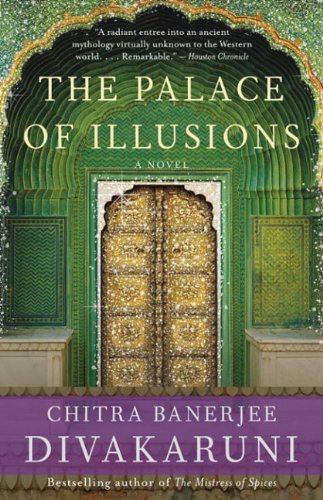
Ready to read The Palace of Illusions?
Get it on Amazon →