Some books you hand over gently, with a warning attached. Cormac McCarthy's 2006 novel runs barely 300 pages, told in fragments with no quotation marks, about a father and his son walking south through a country that has died. Twenty years on, it is still the default answer when someone asks what the end of the world would actually feel like.
What it's about
A man and a boy push a shopping cart along a road through ash. The cause of the catastrophe is never explained, which is part of the point. The trees are dead. The sky stays grey. There are no animals, no crops, no seasons worth the name. They are walking toward the coast because the man has decided the coast is a thing worth walking toward. That is close to the entire plot.
What fills the space is the relationship. The man teaches the boy how to hide, how to ration, when to run. The boy keeps asking whether they are still the good guys, a question the man answers with more confidence than he has. The danger comes from other survivors, because in a world with nothing left to grow, scavenging has turned into something worse. McCarthy stages a few encounters that readers tend to remember for the rest of their lives. Neither character is named. They carry a pistol with almost no ammunition plus a phrase the boy repeats like a prayer: they are carrying the fire.
Why everyone's talking about it
It won the Pulitzer Prize in 2007 after Oprah picked it for her book club, an unlikely pairing that put a brutal literary novel into supermarket carts. A 2009 film adaptation starring Viggo Mortensen followed. The bigger reason it persists is that the culture kept needing it. Every wildfire season, every supply chain scare, every stretch of orange sky sends people back to it. McCarthy's stripped syntax also reshaped a generation of literary post-apocalyptic fiction; you can hear it in books published a decade later.
The verdict, for now
Read it to understand why it matters, but not during a bad week. The bleakness is total by design, so there is little relief and almost no story in the conventional sense; the structure is a walk, then another walk. Some readers find the prose incantatory, others find it mannered, all those sentence fragments and biblical cadences doing heavy lifting where a plain sentence would serve. The ending divides people too, landing for some as earned grace and for others as a consolation the preceding pages never permitted. Short enough to finish in two sittings. Heavy enough to stay much longer.
Read it if you loved
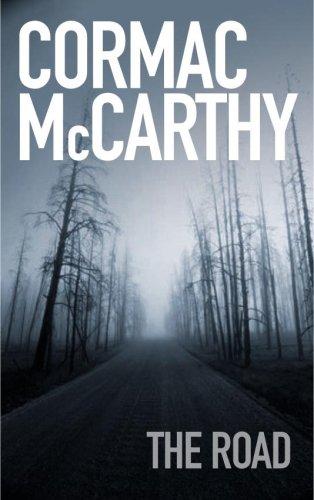
Ready to read The Road?
Get it on Amazon →