Two kids meet in a hospital game room in the 1980s, bond over Super Mario Bros., then spend the next three decades building video games together, falling out, circling back. Gabrielle Zevin's 2022 novel became the rare book about gaming that people who never touch a controller pressed into each other's hands. It is a love story in which the lovers never quite get together; the work is the romance.
What it's about
Sam Masur and Sadie Green reconnect as college students in mid-1990s Cambridge after years of estrangement. Both are brilliant, wounded, obsessed with play. Together they build Ichigo, a game that makes them famous before they turn twenty-five. With their friend Marx as producer, they found a studio, move to Los Angeles, then spend decades cycling through collaboration, jealousy, betrayal, grief. Zevin follows the partnership across roughly thirty years, through hit games, flops, personal catastrophe.
The novel treats game design as its central metaphor. Games are worlds where failure is temporary, where you get infinite lives, where tomorrow always offers another restart. Real life is less forgiving. Zevin threads in Sam's chronic pain from a childhood accident, Sadie's battles with credit and recognition in a male-dominated industry, questions about who gets to tell which stories. The title borrows from Macbeth's bleakest speech, then quietly inverts it.
Why everyone's talking about it
The book was a genuine phenomenon: a long-running number one bestseller, Amazon's Best Book of 2022, a book club fixture, a BookTok staple with a devoted fandom that shorthand-calls it "Tomorrow x3." Screen adaptation rights sold in a headline-making deal. Its crossover appeal is the story; readers who have never played a video game report crying over a fictional one. It also landed at a moment when stories about creative partnership, rather than marriage plots, felt fresh.
The verdict, for now
This is a big-hearted, propulsive novel about friendship as a lifelong creative act. It earns most of its emotional swings honestly. It is not flawless: a late section narrated from inside a game world divides readers sharply, with some finding it devastating while others find it a gimmick that stalls the momentum. Sam and Sadie also sustain their conflict through decades of stubborn miscommunication, which some readers experience as tragic and others as exhausting. If you can forgive two prickly people for refusing to say the obvious thing for thirty years, this one stays with you. Zevin makes the case that making something with another person is its own kind of love, maybe the most durable kind.
Read it if you loved
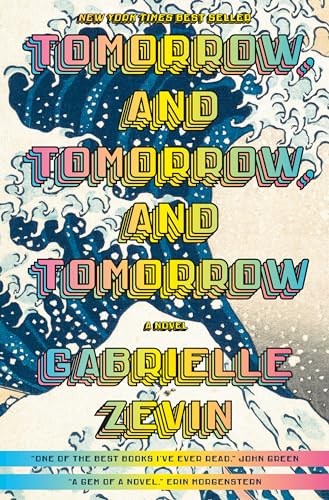
Ready to read Tomorrow, and Tomorrow, and Tomorrow?
Get it on Amazon →