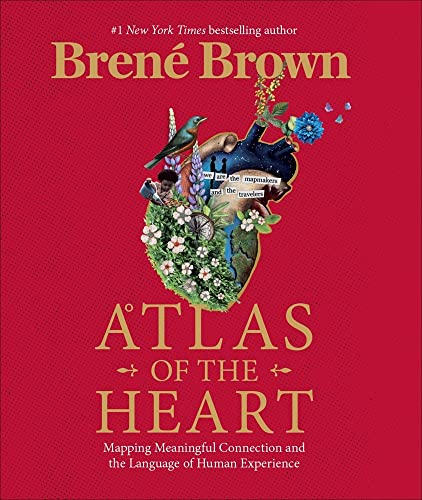
Brené Brown built a career on naming the things most of us would rather not talk about: shame, vulnerability, the ache of not belonging. With Atlas of the Heart, she goes further and tries to name everything. The book maps 87 distinct emotions and human experiences, arguing that most of us navigate our inner lives with a vocabulary of about three words. Happy, sad, angry. Brown's bet is that language itself is the tool; if you can name an emotion precisely, you can actually do something with it.
What it's about
Atlas of the Heart is organized like a travel guide through emotional terrain. Brown groups the 87 emotions into thirteen thematic chapters, each framed as a place we go: places we go when things are uncertain, when we compare, when life is good, when we feel wronged. Within each, she draws sharp distinctions between feelings we tend to blur together. Envy is not jealousy. Shame is not guilt. Overwhelm is not stress. These distinctions sound academic until you catch yourself misdiagnosing your own bad day.
The book draws on Brown's two decades of research as a professor at the University of Houston, along with survey data her team collected from thousands of people. It is also her most visual book by far: a large-format, full-color production with art, pull quotes and generous white space. HBO Max adapted it into a five-part series in 2022, with Brown hosting, which pushed the book even further into the mainstream after its debut atop the New York Times bestseller list in late 2021.
Why everyone's talking about it
Timing did a lot of work here. The book landed in November 2021, when the collective vocabulary for languishing, burnout and anxious hope was running on fumes. Therapists recommend it, book clubs dissect it, screenshots of its emotion definitions circulate endlessly on Instagram and Pinterest. It has become the coffee-table book people actually open, which is rarer than it sounds.
The verdict, for now
The honest caveat: this is a reference book wearing a bestseller's clothes. Readers who loved the confessional storytelling of Daring Greatly or Rising Strong sometimes find Atlas colder, more encyclopedic, a catalog of definitions rather than a narrative you sink into. Eighty-seven emotions covered in one volume also means breadth wins over depth; some entries get a page where they deserve a chapter. But as a book you keep within reach, dip into after a hard conversation or hand to someone who insists they are "fine," it earns its shelf space. Precision about feelings turns out to be surprisingly practical.
Read it if you loved
Ready to read Atlas of the Heart?
Get it on Amazon →