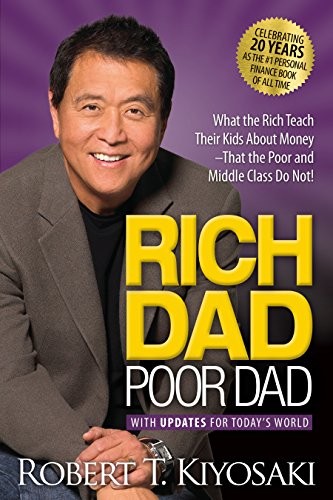
Few personal finance books provoke such strong reactions as Rich Dad Poor Dad. It is one of the best-selling money books of all time, credited by countless readers with waking them up to how wealth actually works and it is also sharply criticized for thin specifics and questionable advice. Both things are true, which is exactly why it is worth understanding rather than dismissing.
What it's about
Robert Kiyosaki builds his lessons around a parable: two father figures with opposite philosophies. His biological father, the "poor dad," was highly educated, worked hard for a paycheck and never got ahead. His friend's father, the "rich dad," lacked formal education but understood money and built real wealth. The gap between them, Kiyosaki argues, was mindset and financial literacy, not income.
From that contrast he hammers a few core ideas. Schools train you to be an employee, not to understand money. The single most important skill is knowing the difference between an asset, which puts money in your pocket and a liability, which takes it out and steadily acquiring the former. Wealth comes from making money work for you, through businesses and investments, rather than trading time for wages forever. It is more a mindset manifesto than a step-by-step plan.
Why everyone's talking about it
Rich Dad Poor Dad has sold tens of millions of copies and shaped how a whole generation talks about assets, passive income and financial freedom. For many readers it was the first book that made money feel like a system you could learn rather than a mystery, which is why it keeps getting handed to young people.
If you want a motivating jolt that reframes how you think about earning and owning, this delivers and its central asset-versus-liability lesson is genuinely valuable. Readers should go in clear-eyed, though: the book is light on concrete, actionable steps, some of its advice is risky or oversimplified and elements of the "rich dad" story are disputed. Come for the mindset shift and pair it with a more practical guide for the how.
The verdict, for now
Read it for the reframe, not the roadmap. Come for the asset-versus-liability lesson that has changed how millions think about money, stay aware that the specifics are thin and best supplemented elsewhere. It is more spark than instruction manual and on that level it works.
Read it if you loved
Ready to read Rich Dad Poor Dad?
Get it on Amazon →