In December 1972, masked intruders dragged Jean McConville, a widowed mother of ten, out of her Belfast flat while her children clung to her legs. She was never seen alive again. Patrick Radden Keefe's Say Nothing opens with that abduction and then spends four decades untangling who took her and why, along with what the code of silence around her death cost everyone it touched.
What it's about
The McConville disappearance is the spine, but the book widens into a full narrative history of the Troubles told through a handful of unforgettable figures. Chief among them is Dolours Price, the radical who helped bomb the Old Bailey as a young IRA volunteer; alongside her stand Brendan Hughes, a legendary Belfast commander, plus Gerry Adams, the political leader who has always denied ever being in the IRA at all. Keefe draws heavily on the Belfast Project, a secret oral history archive at Boston College in which former paramilitaries recorded confessions on the promise they would stay sealed until death.
The second half follows the long hangover: hunger strikes, the peace process, the bitterness of foot soldiers who felt the cause they killed for was quietly negotiated away. When courts forced open the Boston College tapes, old secrets began surfacing. Keefe follows the thread all the way to the question of who actually pulled the trigger on Jean McConville.
Why everyone's talking about it
Say Nothing arrived in 2018 to the kind of reception most nonfiction never sees. It won the National Book Critics Circle Award along with the Orwell Prize; the New York Times named it one of the ten best books of the year. The 2024 FX series brought a whole new wave of readers, many of whom knew almost nothing about Northern Ireland going in. It reads like a thriller yet doubles as a serious moral history of political violence.
The verdict, for now
This is narrative journalism at close to its ceiling: rigorous, propulsive, humane toward people who did terrible things without ever excusing them. The honest caveat is the ending. Keefe closes by naming the person he believes fired the fatal shot, a conclusion built on inference rather than proof, which struck some critics as a leap a more cautious reporter would not have made. The book also lives mostly inside the republican world; loyalist voices are thin. Neither flaw sinks it. As an entry point to the Troubles, or simply as a story about the corrosive weight of secrets, it has few equals.
Read it if you loved
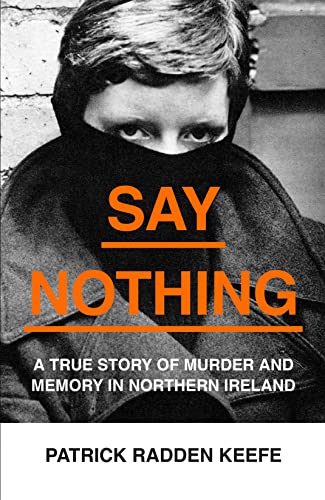
Ready to read Say Nothing?
Get it on Amazon →