In July 1984, brothers Ron and Dan Lafferty murdered their sister-in-law Brenda Lafferty along with her infant daughter Erica, insisting that God had commanded the killings. Jon Krakauer, already famous for Into the Wild and Into Thin Air, uses that horrifying case as the entry point for a sweeping examination of Mormon fundamentalism. The result remains one of the most argued-about true crime books of the 2000s.
What it's about
The book braids two narratives. The first follows the Lafferty brothers, once conventional Latter-day Saints, as they drift into an extremist splinter world of self-styled prophets, plural marriage, tax resistance. Ron Lafferty claimed a "removal revelation" naming Brenda, a young woman who had pushed back against the brothers' radicalism, as someone God wanted eliminated. Krakauer reconstructs the crime, the theology behind it plus the strange legal aftermath, in which Ron's courtroom fate hinged on whether believing God speaks to you can count as insanity.
The second narrative is a history of Mormonism itself: Joseph Smith's revelations, the early church's embrace of polygamy, the violence of the frontier years including the Mountain Meadows Massacre, then the modern fundamentalist communities along the Utah-Arizona border that never abandoned plural marriage. Krakauer's provocative argument is that the Laffertys were not an aberration but an extreme expression of tendencies embedded in any faith built on ongoing personal revelation.
Why everyone's talking about it
The book got a second life in 2022, when Hulu adapted it into a limited series starring Andrew Garfield as a fictional detective investigating the Lafferty case. That adaptation reignited the original controversy: the LDS Church took the unusual step of publishing a lengthy rebuttal when the book first appeared in 2003, calling it a distorted portrait of the faith. Two decades on, readers keep returning to it whenever conversations turn to extremism, coercive belief or the borderlands between devotion and delusion.
The verdict, for now
As narrative journalism, this is Krakauer at full power: propulsive, meticulous, unafraid of uncomfortable questions. The fair criticism is that his thesis overreaches. Historians, including some with no stake in defending the church, argued that he draws too straight a line from mainstream Mormonism to the Laffertys' violence; the historical chapters also sometimes crowd out the central case, so the book can feel like two projects stitched together. Read it as a gripping, flawed provocation rather than a definitive history. On those terms it more than earns its reputation.
Read it if you loved
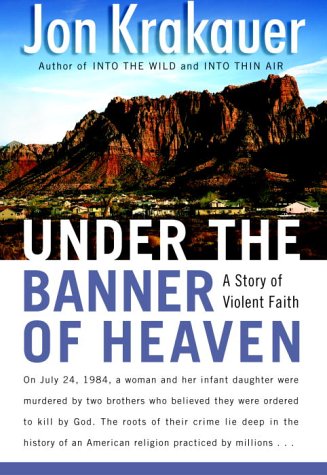
Ready to read Under the Banner of Heaven?
Get it on Amazon →