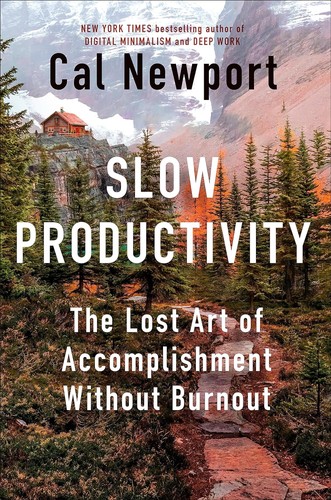
Cal Newport built his reputation telling knowledge workers how to focus. In Slow Productivity he goes further and questions the whole frantic premise of modern work, the assumption that being visibly busy is the same as being valuable. It is a short, calm book with a quietly radical message: most of us are doing too much, too fast and it is making our work worse.
What it's about
Newport's target is what he calls pseudo-productivity, the busywork culture of pings, meetings and overflowing task lists that measures effort by visible activity rather than results. Against it he sets a simple alternative built on three principles: do fewer things, work at a natural pace and obsess over quality. The goal is not to grind harder but to make room for the deep, meaningful work that actually matters and to accept that great things are usually made slowly.
To make the case he looks to the working lives of people who produced enduring work, from scientists to novelists and finds that almost none of them operated at the manic tempo we now treat as normal. They took long stretches, worked in seasons, let ideas ripen. Newport translates that into practical advice for anyone with control over their own schedule and even for those who mostly do not.
Why everyone's talking about it
Arriving amid widespread burnout and a broad cultural rethink of hustle culture, Slow Productivity struck a nerve and became an immediate bestseller. It gave language and permission to a feeling many workers already had: that the treadmill was not sustainable and probably not even effective.
If you are exhausted by the pace of modern work and want a thoughtful framework for a saner approach, this is a genuinely useful read. Readers should know that Newport's advice lands most easily for people with real autonomy over their time and can feel harder to apply in rigid jobs. Come for the permission to slow down and stay for a practical philosophy of doing less, better.
The verdict, for now
Read it, ideally without rushing. Come for the antidote to burnout culture, stay for a persuasive argument that the best work is made at a human pace. In a world addicted to more, it makes an unfashionable and convincing case for less.
Read it if you loved
Ready to read Slow Productivity?
Get it on Amazon →