Before the current avalanche of productivity and leadership books, there was Stephen Covey. The 7 Habits of Highly Effective People has sold tens of millions of copies and shaped how corporations, schools and individuals think about effectiveness and reading the original is a useful reminder of how much of today's advice is a remix of what Covey laid out decades ago.
What it's about
Covey's central move is to reject quick fixes. Real, lasting effectiveness, he argues, grows from character and principles, not from clever tactics or personality tricks. From that foundation he builds seven habits arranged as a progression: first the private victories of self-mastery, be proactive, begin with the end in mind, put first things first, then the public victories of working with others, think win-win, seek first to understand then to be understood, synergize and finally the ongoing habit of self-renewal that keeps the rest sharp.
The framework is deliberately timeless rather than trendy. Ideas that now feel like common sense, focusing on what you can control, clarifying your values before your calendar, listening to genuinely understand, largely entered the mainstream through this book. It is earnest and occasionally dated in tone, but the underlying architecture has held up remarkably well.
Why everyone's talking about it
The 7 Habits is one of the best-selling business and self-help books of all time, a fixture of corporate training and personal development for over three decades. Its vocabulary, "win-win," "sharpen the saw," "circle of influence," has become part of how organizations talk about behavior.
If you want the foundational source that so many later books draw from, this is the one to read, principled and comprehensive rather than quick and punchy. Readers who prefer breezy modern writing or bite-sized tactics should know Covey is more earnest and systematic and the examples show their late-eighties origins. Come for the seven-habit framework and stay for a genuinely durable philosophy of character-first effectiveness.
The verdict, for now
Read the original rather than the imitations. Come for the seven habits everyone half-remembers, stay for a principle-based system that has quietly shaped decades of self-improvement. It is earnest, thorough and more foundational than any single book that followed it.
Read it if you loved
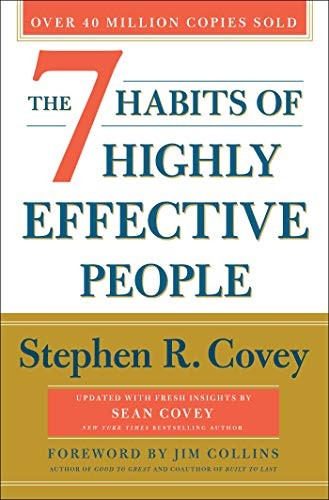
Ready to read The 7 Habits of Highly Effective People?
Get it on Amazon →