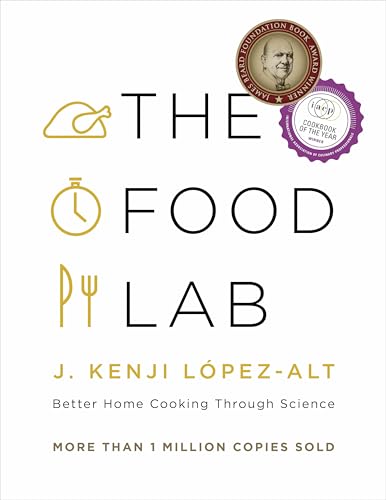
Some cookbooks tell you what to do. The Food Lab tells you why, then proves it with side-by-side tests until you can never unsee the difference between a good roast chicken and a great one. J. Kenji López-Alt turned his obsessive Serious Eats column into a 900-plus page manifesto for curious home cooks. A decade after publication, it still sits on more kitchen counters than almost any book of its era.
What it's about
The premise is simple: treat the home kitchen like a laboratory. López-Alt, an MIT graduate who cooked in Boston restaurants before becoming a food writer, takes American home-cooking staples (eggs, burgers, mashed potatoes, chili, roast turkey) and interrogates every step. Why does resting meat matter? Does searing really seal in juices? He runs the experiments, shows the results, then rebuilds each recipe from the evidence up.
The book is organized around technique rather than occasion. Chapters cover eggs and breakfast, stews, ground meat, roasts, pasta, vegetables. Along the way you get foundational lessons on heat transfer, emulsions, salt timing plus signature moves like the reverse sear for steak and the vodka-enhanced pie crust he helped popularize. Photographs document failures alongside successes, which is half the charm.
Why everyone's talking about it
The Food Lab won the James Beard Award for general cooking; it became the rare technical cookbook that crossed into bestseller territory. Its influence is everywhere now: the reverse sear went from blog curiosity to steakhouse standard, while a generation of food YouTubers borrowed its test-everything format. López-Alt's later fame (his POV cooking videos, his follow-up The Wok) keeps sending new readers back to the book that started it all.
The verdict, for now
This is the closest thing modern American cooking has to a foundational text, but it demands commitment. The sheer bulk makes it awkward as a quick weeknight reference; you flip through pages of experimental method to reach the actual recipe. The scope also skews heavily toward meat, eggs, classic comfort food, so vegetarians and cooks hunting for global flavors will find whole chapters that barely apply to them. Some of its science has been refined since 2015, occasionally by Kenji himself, who publicly revises his own conclusions. None of that sinks it. If you want to understand cooking rather than just follow instructions, this remains the single best place to start.
Read it if you loved
Ready to read The Food Lab?
Get it on Amazon →