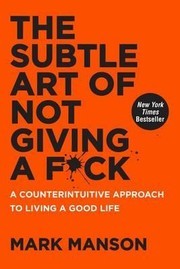
The title is a dare and it worked: The Subtle Art of Not Giving a Fck* became one of the best-selling self-help books of its generation partly on the strength of that cheerful obscenity. But readers who came for the shock stayed for something more useful. Under the swearing, Mark Manson is making a genuinely sensible argument about attention, values and the limits of positivity.
What it's about
Manson's core claim is a rebuke to the whole feel-good self-help industry. You cannot care about everything and trying to is exactly what makes people miserable and anxious. We each have a limited budget of genuine concern, so the real skill in life is not caring more, it is choosing what to care about and being willing to not give a damn about the rest. Do that badly and you burn your energy on other people's opinions and trivial slights; do it well and you free yourself to invest in what actually matters.
From there he makes a case that runs counter to a lot of pop psychology: that problems are not obstacles to a good life but the substance of it, that accepting your limitations is more freeing than chasing endless self-improvement and that good values are chosen, not felt. It is delivered with jokes and blunt stories, but the underlying philosophy is closer to Stoicism than to the affirmation shelf.
Why everyone's talking about it
The book sold in the many millions and helped launch a whole wave of profane, anti-hustle self-help, turning Manson into one of the genre's biggest names. Its irreverent tone made personal-development advice palatable to people who would never touch a traditional self-help title.
If you are allergic to relentless positivity and want practical philosophy with a sense of humor, this is a genuinely refreshing read. Readers who dislike crude language or want rigorous, cited science should look elsewhere, since the profanity is constant and the tone is anecdotal by design. Come for the blunt attitude and stay for a surprisingly clear-eyed argument about choosing your values.
The verdict, for now
Read it if the usual self-help makes you roll your eyes. Come for the cheeky title, stay for a sane, funny case for caring less about the wrong things and more about the right ones. It earns its enormous sales more than the cover suggests.
Read it if you loved
Ready to read The Subtle Art of Not Giving a F*ck?
Get it on Amazon →