Patricia Highsmith did something in 1955 that crime fiction has never fully recovered from: she made the murderer the protagonist. Tom Ripley lies, forges, kills; he steals another man's entire life. You root for him anyway. That queasy complicity is the whole point, which is why this novel still ranks among the most unsettling reading experiences in American fiction.
What it's about
Tom Ripley is scraping by in New York on small cons when a shipping magnate named Herbert Greenleaf mistakes him for a close friend of his son Dickie. Greenleaf offers to pay Tom's way to Italy to talk Dickie into coming home. Tom, who has no real friends, no money, no fixed self to speak of, takes the deal. He finds Dickie living an idle expat life on the Italian coast: painting badly, sailing, spending his allowance alongside his companion Marge Sherwood.
What follows is obsession dressed up as friendship. Tom insinuates himself into Dickie's world, studies his clothes, his signature, his mannerisms. When Dickie starts to tire of him, Tom makes a decision that turns the book from a character study into a thriller. The second half is a sustained exercise in dread as Tom juggles identities, forged letters and increasingly suspicious police. Highsmith's masterstroke is keeping you locked inside Tom's rationalizing, anxious head the entire time; his fear becomes your fear.
Why everyone's talking about it
The adaptations refuse to let this book fade. Purple Noon took a swing at it in 1960, Anthony Minghella's 1999 film with Matt Damon made it a modern touchstone; Netflix's 2024 black-and-white series with Andrew Scott introduced Ripley to a whole new audience. Beyond the screen, the novel keeps finding fresh relevance: a story about class envy, curated identity and performing a better version of yourself lands differently in the social media era. Scholars have also long read a coded queer subtext into Tom's fixation on Dickie, which Highsmith, herself closeted for much of her career, threaded through the book with remarkable daring for the 1950s.
The verdict, for now
This is essential reading for anyone who cares about psychological suspense, with caveats. The middle stretches move slowly by modern thriller standards; Highsmith's prose is deliberately flat and affectless, which some readers experience as cold rather than chilling. There is no cathartic justice here either, which frustrates people raised on tidier crime novels. But the discomfort is the design. It launched five Ripley novels; start with this one.
Read it if you loved
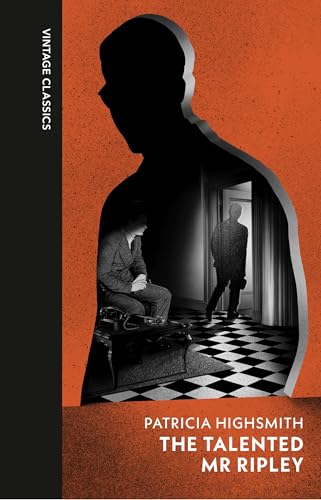
Ready to read The Talented Mr. Ripley?
Get it on Amazon →