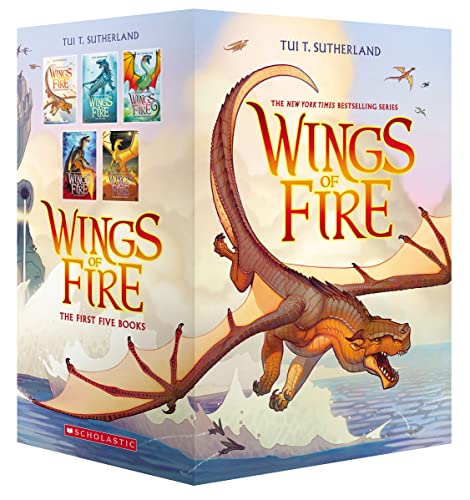
Most fantasy hands dragons a supporting role: mounts, monsters, treasure hoarders. Tui T. Sutherland flipped that arrangement entirely. In Wings of Fire the dragons are the heroes, the villains, the politicians, the prophets. Humans barely register. This box set collects the first five books of the series that turned a generation of elementary schoolers into obsessive readers, the kind who draw dragon tribes in the margins of their math homework.
What it's about
The continent of Pyrrhia is deep into a brutal war of succession among the SandWing dragon tribe, with rival queens pulling the other tribes into the bloodshed. A prophecy promises that five young dragonets, one from each of five tribes, will end the war. Raised in secret under a mountain, the dragonets of destiny eventually break free of their guardians. They discover the world outside is messier than any prophecy allowed for.
The set's smartest structural trick is rotation. Each of the five books hands the narration to a different dragonet: earnest MudWing Clay, fierce SeaWing Tsunami, underestimated RainWing Glory, anxious NightWing scholar Starflight, then hopeful SandWing hybrid Sunny. A character who seems simple from the outside becomes complicated once you're inside their head. It's an elegant lesson in perspective smuggled inside an adventure story.
Why everyone's talking about it
Wings of Fire has been a Scholastic juggernaut since the first book landed in 2012, spending years on bestseller lists while the graphic novel adaptations became a gateway for reluctant readers. Teachers report entire classrooms trading tribe allegiances the way earlier generations sorted themselves into Hogwarts houses. Screen adaptation news has circulated for years, keeping the fandom buzzing. The series also earns quiet praise for its darker undercurrents: war orphans, propaganda, the question of whether destiny is real or just a story adults tell children to control them.
The verdict, for now
For readers eight to twelve, this box set is close to a sure thing; the momentum from book to book is relentless. It comes with caveats. The violence is sharper than the friendly covers suggest, which surprises some parents of younger readers. The prose itself is functional rather than beautiful; Sutherland writes for velocity, not lyricism. The middle books also lean on a repeating rescue-capture-escape rhythm that attentive readers will notice. None of that dents the core appeal. As an on-ramp to fantasy reading, few modern series work this reliably.
Read it if you loved
Ready to read Wings of Fire Box Set?
Get it on Amazon →