Most of us assume breathing is the one skill we mastered at birth. James Nestor spent a decade of reporting arguing otherwise. Breath: The New Science of a Lost Art makes the case that modern humans have quietly become terrible breathers; that our shrinking jaws, chronic mouth breathing plus desk-hunched posture have degraded a function our ancestors performed better without thinking. It became a runaway bestseller, spent months on the New York Times list, then spawned an entire mouth-taping subculture on social media.
What it's about
Nestor, a science journalist who previously explored freediving in Deep, anchors the book in a memorable self-experiment. At Stanford, he had his nostrils plugged for ten days so researchers could measure what pure mouth breathing does to the body. His snoring, blood pressure, sleep quality, stress markers all worsened dramatically; when nasal breathing resumed, they recovered. It is a vivid, slightly grotesque narrative spine for a book that is really about rediscovery.
From there he travels widely. He digs into the skulls of ancient humans to trace how soft modern diets narrowed our mouths, visits Soviet-era researchers behind the Buteyko method, sits with practitioners of Tummo breathing, explores why exhaling longer than you inhale calms the nervous system. His recurring prescription is almost comically simple: breathe through your nose, slow down, aim for roughly five and a half breaths per minute.
Why everyone's talking about it
Breath landed in May 2020, exactly when a respiratory pandemic made everyone hyperaware of their lungs. The timing was uncanny; the appeal was durable. Unlike most wellness books, it reads like adventure journalism, with Nestor gamely serving as his own lab rat. The mouth-taping trend it helped ignite is still everywhere on TikTok; athletes, sleep doctors, anxiety sufferers all cite the book. Few pop-science titles cross from bestseller lists into actual behavior change at this scale.
The verdict, for now
Breath earns its reputation as compelling, genuinely useful reading; the core advice on nasal breathing rests on solid physiology. But it deserves a skeptical eye in places. Nestor is a storyteller first, so striking anecdotes sometimes carry more weight than the underlying studies, several of which are small or preliminary. Some sleep scientists have pushed back on mouth taping as a blanket fix, particularly for people with undiagnosed sleep apnea. Read it as an engaging invitation to pay attention to a neglected function, not a clinical manual. On those terms it delivers more than most books in the category.
Read it if you loved
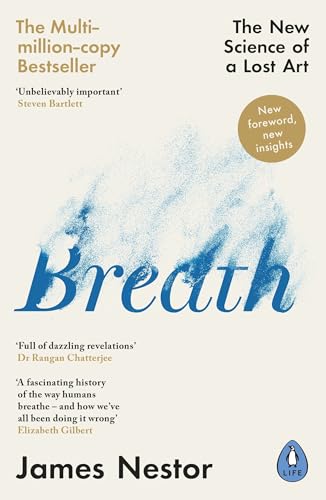
Ready to read Breath?
Get it on Amazon →