The title alone did more work than a thousand publicity campaigns. When Jennette McCurdy's memoir arrived in August 2022, some readers assumed it was a shock-value stunt from a former Nickelodeon star. Then they read it. What they found was one of the most disciplined, darkly funny accounts of parental abuse published in years; a book that sold out its first printing almost immediately and parked itself at the top of the bestseller lists.
What it's about
McCurdy, best known as Sam Puckett on iCarly and Sam & Cat, grew up in a Mormon household in Southern California under the total control of her mother, Debra. Acting was never Jennette's dream; it was her mother's, imposed on her at age six. The memoir traces how that dynamic curdled into something far darker: her mother introducing her to calorie restriction as a young teen, which spiraled into anorexia and later bulimia, along with invasive behavior that McCurdy only recognized as abuse years afterward.
The second half follows Debra's death from cancer in 2013, the strange grief of losing an abuser you loved, McCurdy's decision to quit acting entirely. She writes about the Nickelodeon machine with cold precision, referring to a powerful figure only as "The Creator." Therapy, relapse, recovery; the book refuses to make any of it tidy.
Why everyone's talking about it
The memoir became a genuine cultural event. It debuted at number one on the New York Times list, stayed on it for well over a year, kept selling out at retailers who underestimated demand. Part of the fascination was the Nickelodeon angle, which landed just as broader scrutiny of the network's child-star era was building. But the book outgrew the gossip. Readers who never watched iCarly passed it around because the writing itself, present-tense, staccato, bleakly comic, made a familiar genre feel new.
The verdict, for now
This is the standard other celebrity memoirs now get measured against, because it reads like literature rather than damage control. That said, it has limits. The clipped present-tense voice, so effective in the childhood chapters, can flatten into monotony across 300 pages; some readers also wanted more direct reckoning with the industry figures she keeps anonymous. Neither complaint dents the core achievement. As a portrait of how a child learns to disappear inside a parent's ambition, then slowly reassembles a self, it is honest in ways most memoirs never risk. The title stops feeling provocative by the final chapter. It feels earned.
Read it if you loved
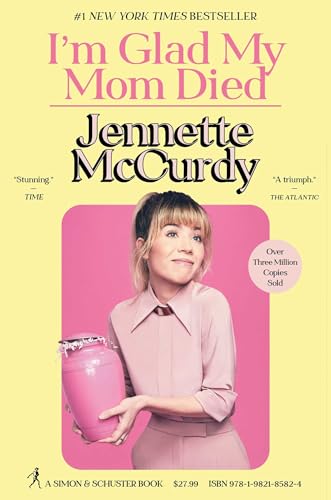
Ready to read I'm Glad My Mom Died?
Get it on Amazon →